


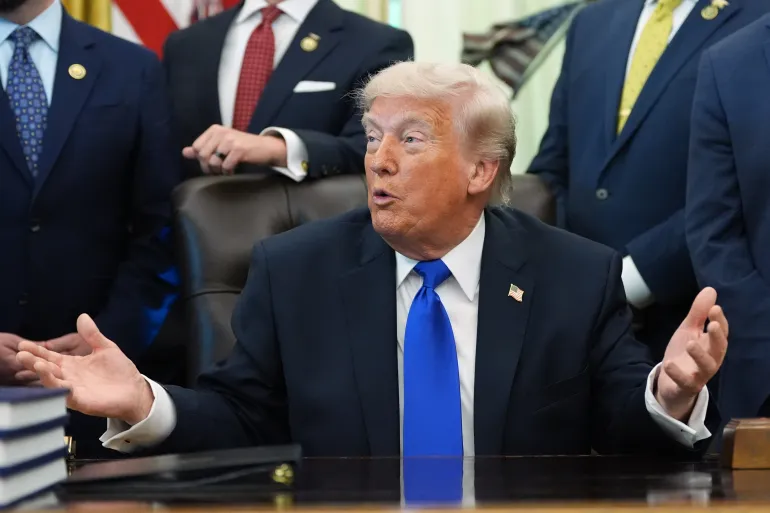


President Donald Trump has signed into law a bill that resumes funding for the Department of Homeland Security, ending an 11-week partial government shutdown. The House passed the Senate-approved proposal by a voice vote on Thursday. Notably, the bill did not include funding for Immigration and Customs Enforcement or Customs and Border Protection.
The two agencies, however, are not exactly broke. They have ample funding through previously approved laws. So why the holdup? Republican House Speaker Mike Johnson initially opposed the measure precisely because it excluded ICE and CBP. But he eventually brought it to a vote after Trump signaled his support.
DHS Secretary Markwayne Mullin welcomed the bill’s passage on Thursday and promptly blamed Democrats for the mess.
“To be clear, this Democrat shutdown NEVER should have happened,” Mullin wrote on X. “To our great, patriotic employees who have continued to protect the homeland every single day without a guaranteed paycheck—thank you. President Trump and I are very grateful to be in the fight with you to Make America Safe Again.”
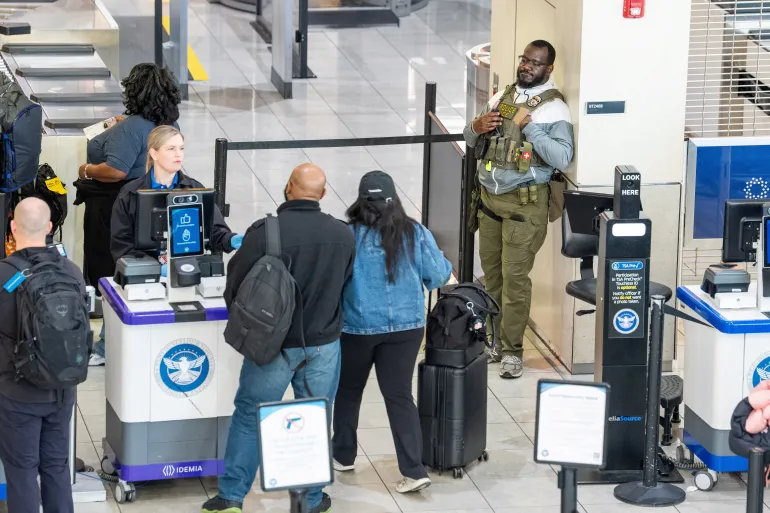
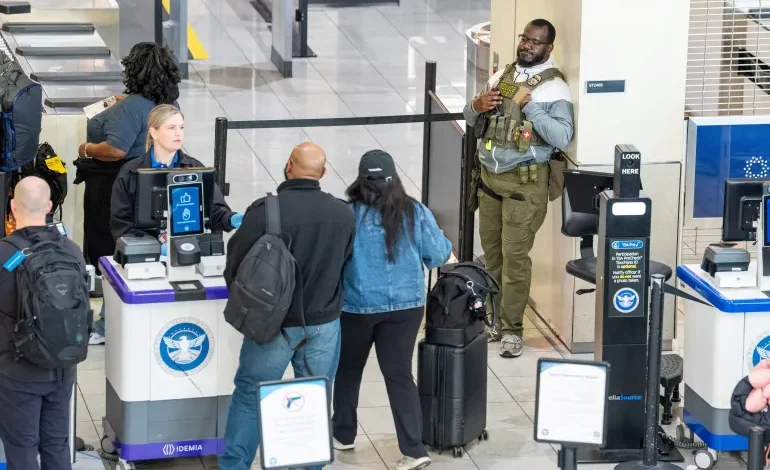
The partial shutdown had left several DHS departments operating on fumes. Long lines formed at airports as many Transportation Security Administration agents reported to work unpaid. There had also been growing concern about possible disruption to the Federal Emergency Management Agency, which responds to natural disasters and is part of DHS.
Democratic congresswoman Zoe Lofgren called the development welcome news.
“I’m glad that we are now funding the law-abiding agencies within DHS, like TSA and FEMA,” she said. “Now Congress needs to work on reining in ICE and CBP and holding them to the same standard to which every cop in America is held.”
The impasse traces back, in part, to a federal immigration crackdown in Minnesota that resulted in the killing of two US citizens in January. On February 4, Democratic leaders in Congress issued a list of demands to reform ICE. Those conditions included banning ICE agents from wearing masks to conceal their identities, prohibiting racial profiling, and ending immigration raids on “sensitive locations” like schools and churches. Without those “common sense reforms,” the Democrats threatened to withhold their votes from any DHS funding legislation.
Republicans rejected the demands, calling them unreasonable. The math here matters: Republicans control both the Senate and the House, but a legislative rule in the Senate — the filibuster — requires a 60-vote threshold to pass major legislation. That gave Democrats enough leverage to force a fight. The DHS shutdown started on February 14. It took until now to resolve it, and even then, ICE and CBP were left out of the final funding bill.



The latest news in your social feeds
Subscribe to our social media platforms to stay tuned