



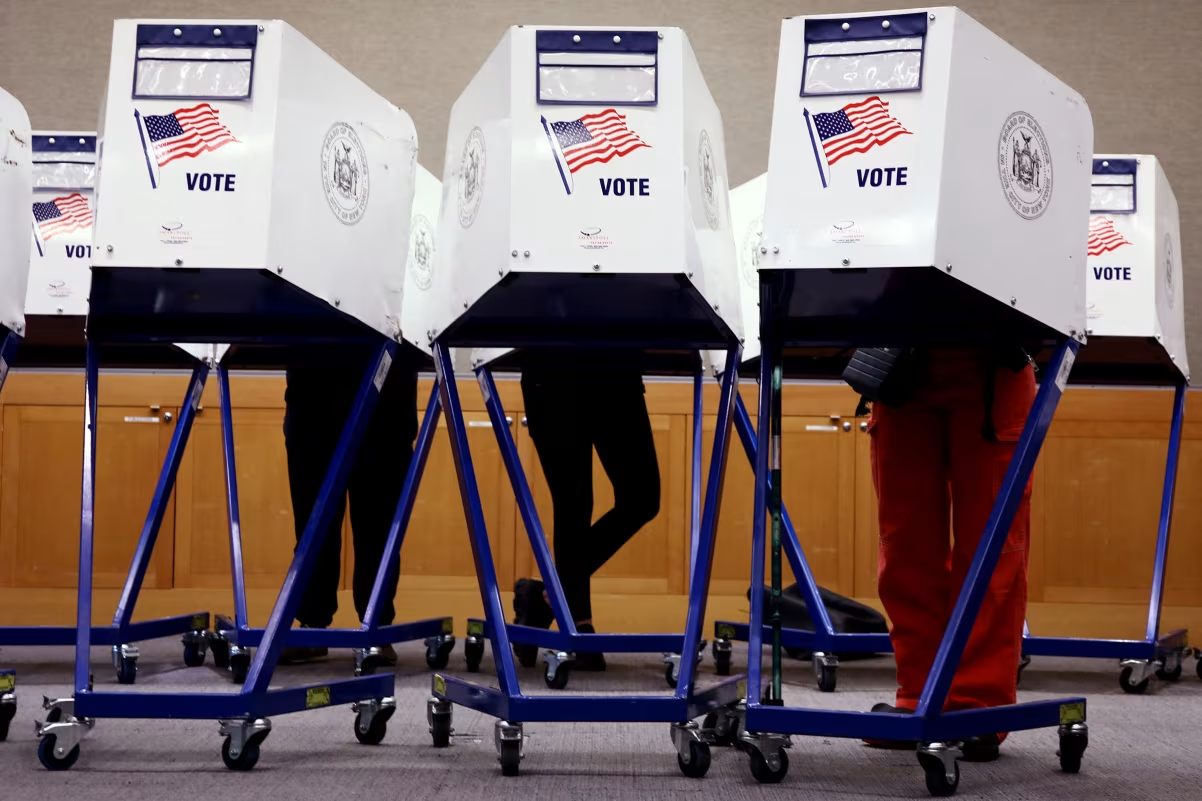

For decades, it has generally been assumed that any mass purges of voter rolls must be completed at least 90 days before an election. Now, Republicans and the Trump administration are testing the scope of that federal ban, as President Donald Trump pushes for more aggressive reviews of voter rolls for non-citizens and other ineligible voters.
The Justice Department has launched a sprawling effort to obtain nearly every state’s voter registration file and review them for suspected non-citizens using a federal immigration database tool known as SAVE—the Systematic Alien Verification for Entitlements. That system has shown itself prone to producing false positives. Some state election officials want the freedom to remove names in the months or weeks before an election. But other officials and voter advocates warn that eligible voters are at risk of being disenfranchised, arguing that the 90-day “quiet period” is needed to give voters mistakenly caught up in removals adequate time to get back on the rolls.
“It sets up a situation where the federal government itself is the actor trying to purge voters from the rolls in the days before the election, which is clearly illegal,” said Brent Ferguson of the Campaign Legal Center, which has successfully sued states for violating the quiet period provision of the National Voter Registration Act.
An appeals court ruled in 2014 that Florida could not use the SAVE data system to purge its rolls within 90 days of an election. The Trump administration and Republicans argue that the ban does not apply to purges aimed at non-citizens and people who should never have been registered in the first place. Another appeals court rejected that argument when made by Republican officials in Virginia, but the Supreme Court in 2024 issued an emergency order allowing then-Gov. Glenn Youngkin to restart a voter removal program just days before the election. (Democratic Gov. Abigail Spanberger ended the program this year, and the lawsuit was settled.)
Now, the Republican National Committee is asking the Supreme Court to take up the question on the merits in a case from Arizona. The Justice Department has claimed the quiet period does not apply to its voter roll review, and in Ohio, Republican Secretary of State Frank LaRose is making similar arguments.
Already, Republican election officials have embraced more aggressive list maintenance programs. Idaho’s review using SAVE initially found 760 potential non-citizens among nearly 1.1 million registered voters. But after further investigation, only about three dozen were referred to law enforcement. In Texas, a lawsuit alleges that what local officials do with SAVE-tagged lists varies greatly county by county—some do additional investigations, others send notices to every voter identified.
Conservatives stress that there are backups: in Virginia, wrongly removed voters could re-register on Election Day under same-day registration laws. In states without that, provisional voting is available. The Department of Homeland Security says it has assigned 150 employees to conduct “manual checks” of SAVE matches for inconsistencies. As of early April, DHS had identified 21,000 potential non-citizens out of 60 million cases submitted—a rate of 0.035%. Another 3% of comparisons came back inconclusive.
“When you’re doing that within that 90-day period, that risk is just higher that those voters won’t have adequate time or notice to provide the documents they’ll need,” said Wren Orey of the Bipartisan Policy Center.
The Arizona case is unlikely to be resolved before the midterms, but emergency litigation could force courts to weigh in on removal programs weeks or days before November’s vote. As Trump’s national citizenship verification bill has floundered in Congress, states have passed laws requiring regular SAVE checks, setting up the potential that the issue will return to the Supreme Court’s emergency docket this fall.


The latest news in your social feeds
Subscribe to our social media platforms to stay tuned