
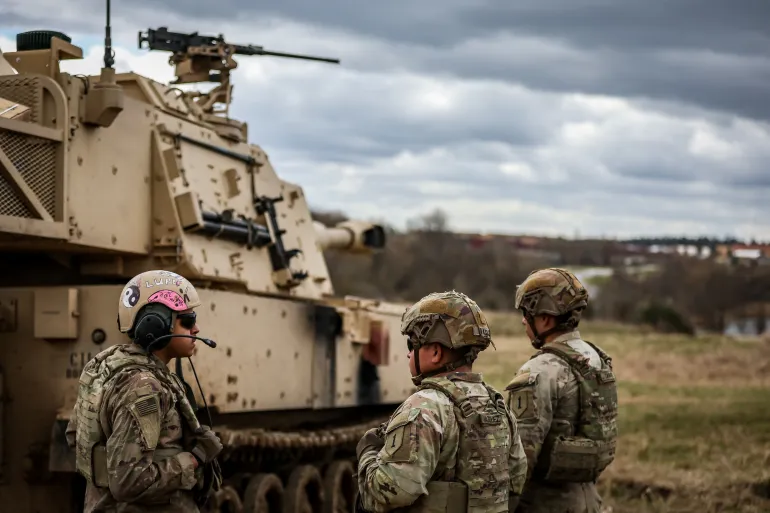




NATO is assessing the implications of Washington’s decision to withdraw about 5,000 troops from Germany, a move that comes at a moment of visible strain inside the Western alliance.
In a brief statement, NATO spokesperson Allison Hart said the bloc is “working with the US to understand the details of their decision on force posture in Germany”, a process expected to unfold over the next six to 12 months.
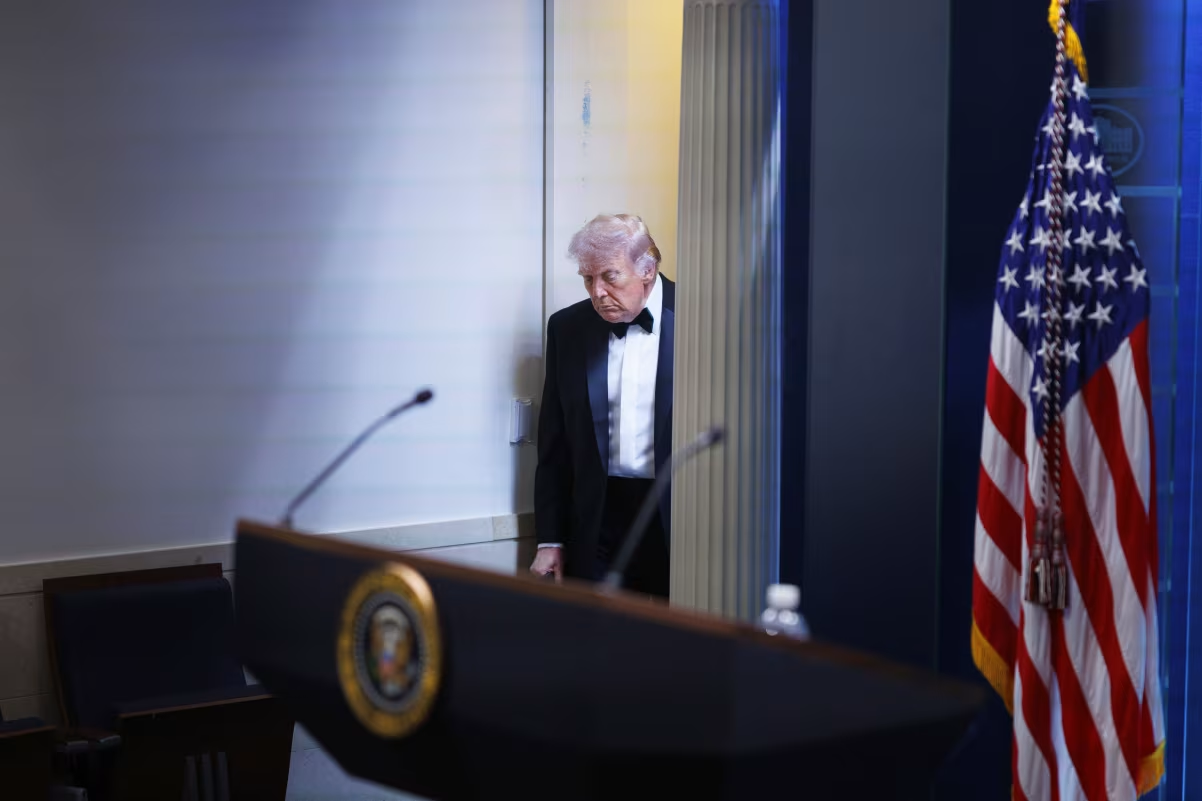
The timing is not incidental. The drawdown lands amid escalating tensions between the Trump administration and key European partners over the war on Iran, with Germany emerging as a focal point of the dispute. President Donald Trump has openly criticised Chancellor Friedrich Merz, accusing Berlin of failing to support US policy, while dismissing NATO itself as a “paper tiger” and “absolutely useless”.
From Berlin’s perspective, the troop reduction looks less like a standalone military adjustment and more like part of a broader pressure campaign. Alongside the withdrawal, Washington has imposed tariffs on European — and particularly German — exports, reinforcing the sense that security and economic tools are being deployed together.
Analysts see the shift as reflecting deeper changes in US strategy. Former diplomat Donald Jensen described it as evidence of a realignment in priorities.
“The reduction or repositioning, whatever you want to call it, suggests a changing US strategic set of objectives,” he said, pointing to the possibility that American forces could be redirected toward Asia, where Washington views China as a more significant long-term challenge.
Jensen also suggested the consequences could extend beyond immediate troop levels.
“But certainly, it portends a more transactional view by Washington of our European partners,” he said.
That transactional logic is already raising concerns in Congress. Senior Republican lawmakers Roger Wicker and Mike Rogers warned that pulling back forces too early could weaken deterrence at a critical moment.
Their intervention highlights a tension inside the US itself: even as the administration pushes for a shift, parts of the political establishment remain wary of the strategic risks.
In Europe, the response has been more measured. German Defence Minister Boris Pistorius said the country had anticipated a US drawdown and framed it as a signal that Europe must take greater responsibility for its own security. NATO has echoed that line, presenting the move as part of a longer-term transition rather than a rupture.
“We remain confident in our ability to provide for our deterrence and defence as this shift towards a stronger Europe in a stronger NATO continues,” Hart said.
That framing aligns with recent commitments by NATO members to increase defence spending, with targets rising significantly above previous benchmarks. The idea is to compensate for any reduction in US presence with greater European capacity.


The latest news in your social feeds
Subscribe to our social media platforms to stay tuned