
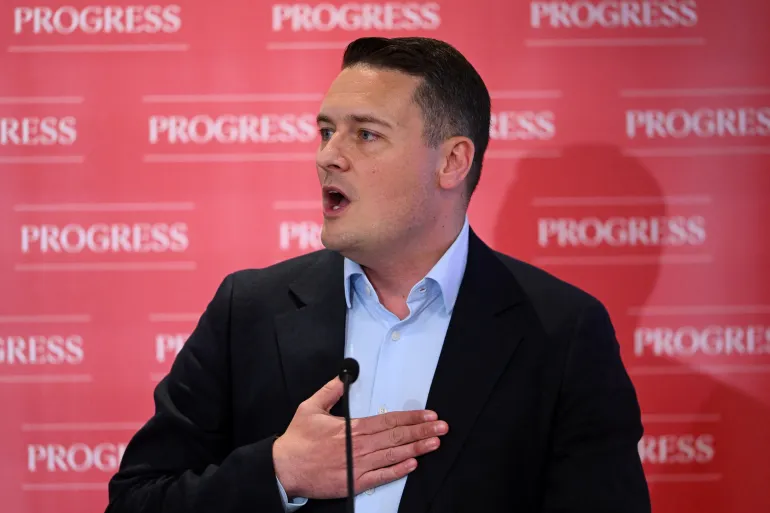


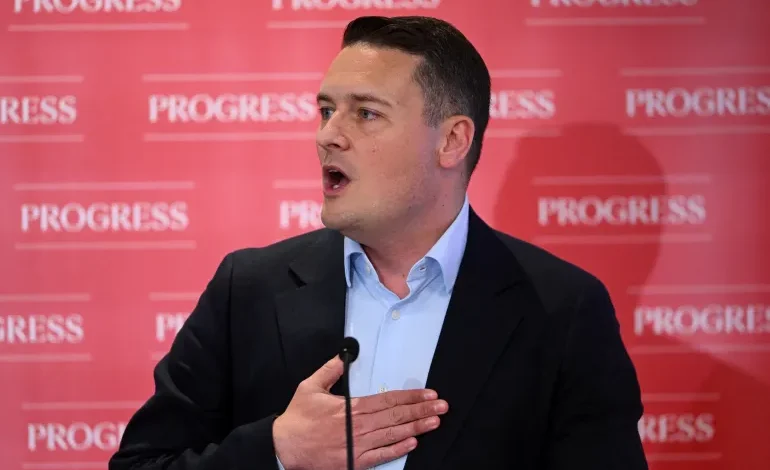

Wes Streeting has formally declared that he will run to replace Keir Starmer, turning what had been a simmering leadership struggle inside the governing Labour Party into an open contest.
Streeting, who resigned as health secretary this week, said on Saturday that he intends to stand once the party formally launches a leadership race.
“We need a proper contest with the best candidates on the field, and I’ll be standing,” Streeting told a think tank event in London.
The announcement adds to the growing sense that Starmer’s position is becoming increasingly difficult to sustain after Labour’s heavy losses in recent local elections. Although the prime minister has resisted calls to step down, the conversation in Westminster has shifted from whether a leadership challenge will happen to when.
Because Labour holds a substantial majority in Parliament, whoever wins the party leadership would automatically become prime minister.
At a gathering organised by the Progress group, Streeting sharpened his criticism of the government’s performance, arguing that Labour entered office without a sufficiently clear plan.
Labour “arrived in government underprepared in too many areas and lacking clarity of vision and direction”, he said.
Streeting had already signalled a decisive break with Starmer on Thursday, when he resigned from the cabinet and said he no longer had “confidence” in the prime minister’s leadership.
Yet his own candidacy does not eliminate support for other contenders. Just one day earlier, Streeting publicly praised Andy Burnham, widely viewed as one of the strongest potential challengers.
“We need our best players on the pitch. There is no doubt that Andy Burnham is one of them,” Streeting wrote on X. “Andy is the best chance of winning, and that should override factional advantage or propping up one person.”
That endorsement highlighted how fluid the contest remains. Streeting is now entering the race himself, but Burnham continues to attract support across different wings of the party.
Starmer’s government has been weakened by a series of controversies, including criticism over the appointment of Peter Mandelson as ambassador to Washington and frustration among Labour MPs over the pace of domestic reforms.
More than 80 Labour lawmakers have urged the prime minister to resign, and four junior ministers have stepped down, underscoring the scale of unrest inside the party.
Burnham’s prospects could become clearer next month. Labour MP Josh Simons has resigned his seat in Makerfield to allow Burnham to return to Parliament, a necessary step if he is to challenge for the leadership.
If elected, Burnham would still need nominations from 81 Labour MPs, or 20 percent of the parliamentary party, to enter the contest.
Another possible contender, Angela Rayner, said this week that tax authorities had cleared her of wrongdoing, removing one potential obstacle to a leadership bid.

The latest news in your social feeds
Subscribe to our social media platforms to stay tuned