



UN Cuts Global Growth Outlook as Iran War Hits Energy Markets

The United Nations has lowered its forecast for global economic growth, warning that the fallout from the war on Iran is now spreading well beyond energy markets.
The UN’s Department of Economic and Social Affairs said on Tuesday that global GDP is expected to grow 2.5 percent this year and 2.8 percent in 2027. That is down from its January forecast of 2.7 percent growth in 2026 and 2.9 percent the following year.
The downgrade is being driven by higher energy prices, the effective closure of the Strait of Hormuz and instability in financial markets. What began as a shock to oil and gas supply has become a wider drag on the global economy.
Shantanu Mukherjee, director of economic analysis at the UN department, said the US-Israel war on Iran, launched on February 28, had started as a “blow to energy markets” but had since become a “broader supply shock of uncertain scope, magnitude and duration that is rippling across the world”.
The UN forecast assumes oil prices will start to ease in the second half of the year and that governments will be able to soften part of the impact by using fuel reserves. That is the relatively controlled version of the story.
The less comfortable version is what Mukherjee called an “adverse scenario”, in which global growth slows to 2.1 percent. That would be one of the weakest performances this century outside the COVID-19 pandemic and the 2007-2009 global financial crisis.
“Our numbers right now are coming with a significant amount of uncertainty,” Mukherjee told a news conference.
“And uncertainty… in and of itself is a significant drag on the economy.”
Developing countries are bearing the sharper hit. Their growth this year is expected to be 1.3 percentage points below the pre-pandemic average, compared with a 0.7 percentage-point decline for the global economy overall.
Western Asia faces the steepest downgrade. The UN cut its 2026 growth forecast for the region from 4.1 percent to just 1.4 percent.
The Caribbean, West Africa, Central Africa, South-Eastern Europe and the United Kingdom also saw their forecasts for this year reduced by 0.4 to 0.5 percentage points.
The outlooks for the United States and China, the world’s two largest economies, were left unchanged, at 2 percent and 4.6 percent growth, respectively.
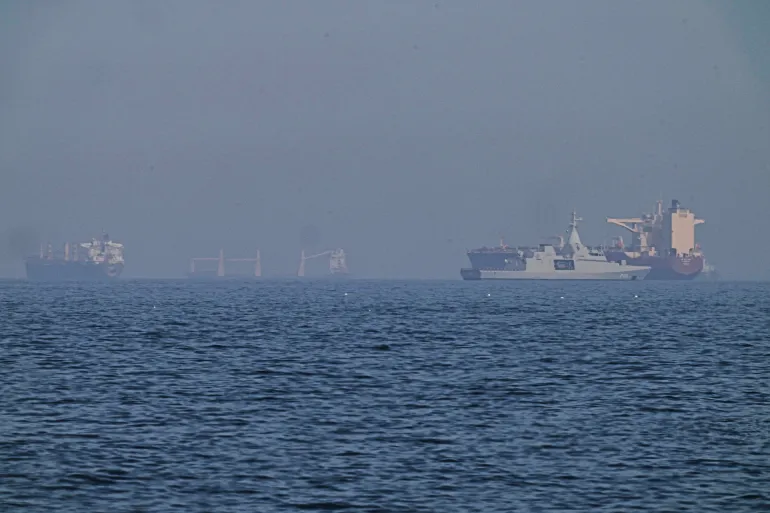
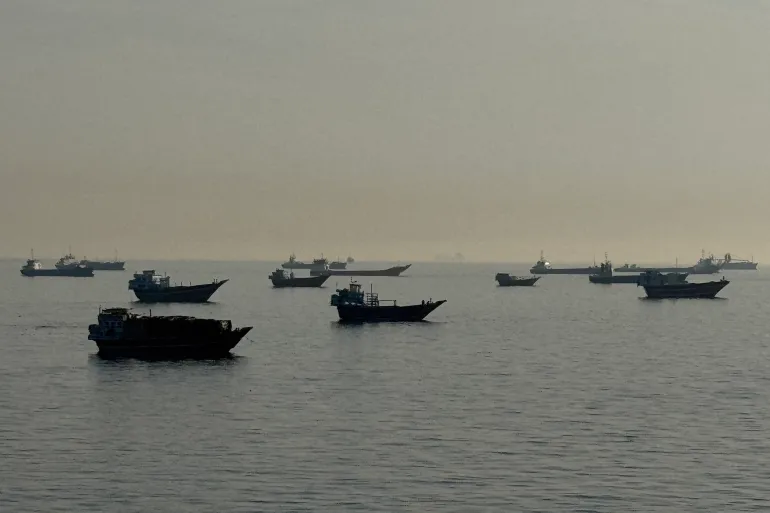
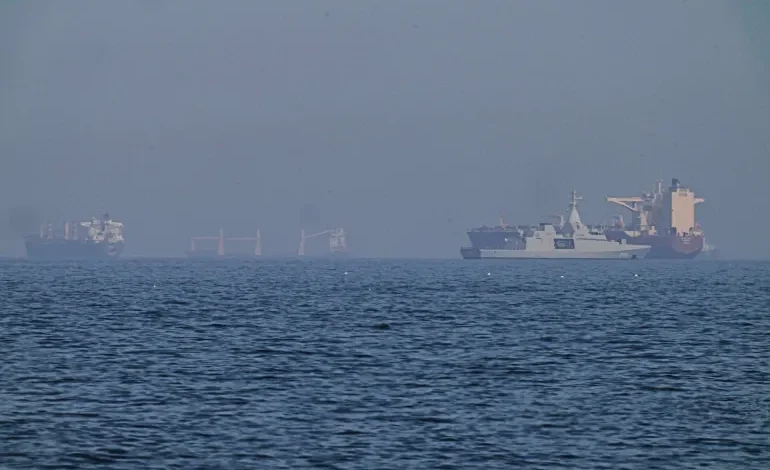
Although the US and Iran agreed to a truce on April 8, the Strait of Hormuz remains effectively paralysed. Iranian attack threats have kept shipping activity at a fraction of normal levels, disrupting a waterway central to global oil and natural gas supply.
On Monday, only 10 commercial ships passed through the strait, according to maritime intelligence firm Windward. Before the war began, about 130 vessels crossed daily.
The UN’s warning follows a similar move by the International Monetary Fund, which cut its global growth forecast in April from 3.3 percent to 3.1 percent.


The latest news in your social feeds
Subscribe to our social media platforms to stay tuned