


Why Are People Blaming The Freedom Caucus For $4 Billion School Funding Package?


People are blaming—and crediting—the Wyoming Freedom Caucus for the Legislature’s nearly $4 billion per-biennium school spending package. Whether that is justified depends on whom you ask. On one hand, the caucus’s former chair took credit for the package after it became law. On the other, the spending plan contains a mix of favored and hated provisions, and it is often misunderstood.
“Now, to say this was a bill that was brought forward by a small caucus—it can’t be,” said state House Majority Floor Leader Scott Heiner, R-Green River, during a virtual town hall. “Because it was overwhelmingly supported by all the legislators, except for seven.” Heiner co-chairs the Select Committee on School Finance Recalibration. “It had overwhelming support not only from the Republicans but Democrats—and everyone in the Legislature.”
Yet, when a Wyoming High School Activities Association press release warned of potential cuts to school activities, many in the public criticized the Freedom Caucus. Columnist Randy Tucker wrote that the caucus “was able to take a deadly shot at the heart of high school activities and athletics by cutting the budget by 8.4 percent.” Under a lawmaker’s Facebook repost of the WHSAA statement, commenters blamed the “freeDumb caucus” and “MAGA cult.” Tucker told Cowboy State Daily he felt comfortable blaming the caucus because its members or allies chair multiple House committees, including Heiner’s recalibration committee and the House Education Committee. “The Freedom Caucus was pretty good at getting themselves into committee chairmanships,” he said.
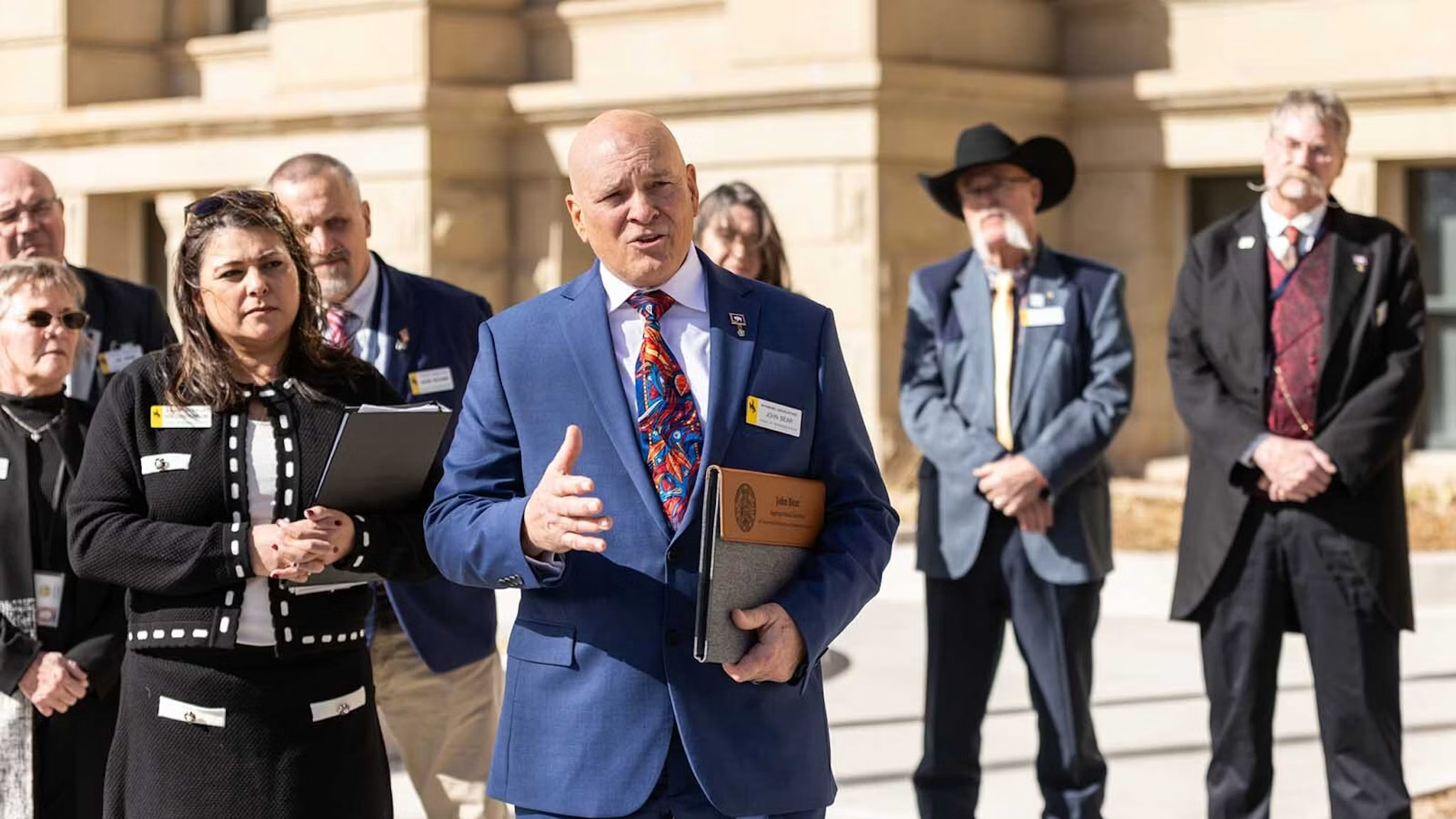
The caucus issued a statement March 5 calling the recalibration bill “a win” for students and teachers and proof that “conservatives can govern.” Former caucus chair Rep. John Bear, R-Gillette, took credit in a guest column, writing, “We passed a historic school finance bill that locks state dollars in the classroom, providing double-digit pay increases for teachers.” He maintained that position in a Thursday interview. “It’s certainly something the entire Legislature did, but we led the effort,” Bear said. “The criticisms about what is going on in the bill are hyperbolic, first of all.”
Three of the 12 recalibration committee members are known Freedom Caucus members. All 12 voted in January to advance the package. The House killed it Feb. 9, voting 41-21—one vote shy of the two-thirds threshold needed in an even-numbered year. The Senate rescued it with a unanimous introductory vote. After amendments, the Senate voted 30-1 to send it to the House, which passed it 52-7. The seven nay votes came from non-Freedom Caucus Republicans; the five House Democrats present voted aye. Gov. Mark Gordon let it become law without his signature.
Money for school sports and activities is now expected to drop from $46.3 million to $42.4 million per year. Dropping enrollment is one factor. Another is the educational “silo,” a provision banning districts from using classroom educator money for other areas like activities. It follows complaints that districts could not pay and hire teachers well enough. House Speaker Chip Neiman said the silo is exposing maneuvers that diverted classroom dollars. “Why you spending so much on activities?” he asked. “If you don’t have enough money to hire teachers, then put the money there.”
Rep. Tom Kelly, a recalibration committee member, took to Facebook to address the “consternation,” attributing the drop to declining enrollment. Heiner said the state adopted a consultant’s new formula for activities funding and intends to reevaluate it. Meanwhile, Heiner and Neiman urged districts to tap into reserves while lawmakers address activities funding. The Wyoming Behavioral Health Alliance issued a statement voicing “deep” concern over reports that some districts are using recalibration changes to reduce or eliminate school counselor positions—even though the package increased funding for counselors at every grade level for the first time in state history. The groups urged districts to implement the bill “as intended.” Rothfuss said lawmakers should focus less on taking credit and more on “just trying to help people.”
The latest news in your social feeds
Subscribe to our social media platforms to stay tuned