


Pope Leo XIV Warns AI Risks Creating ‘New Forms of Slavery’
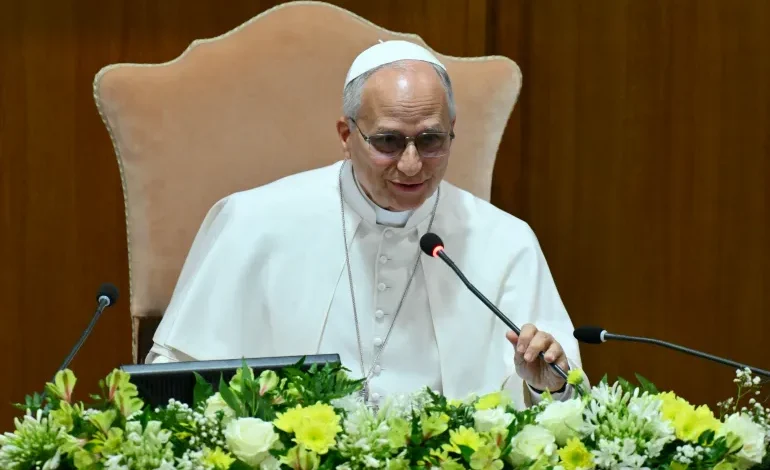

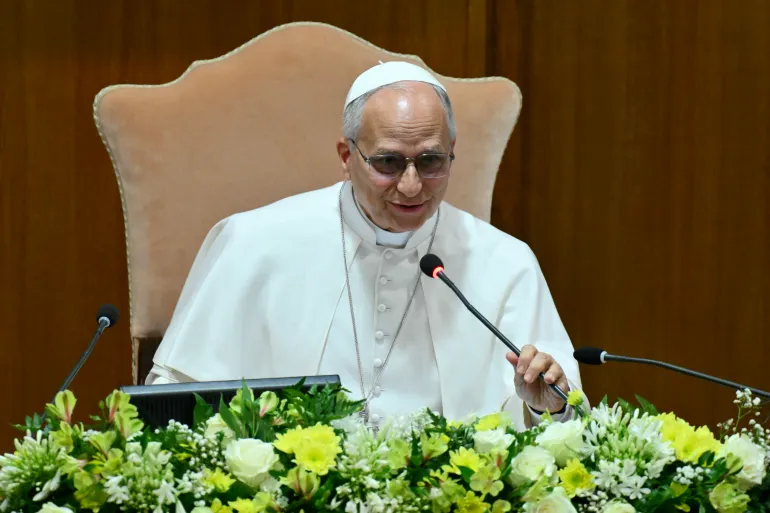
Pope Leo XIV has used his first encyclical to deliver one of the strongest warnings yet from a major global religious leader about artificial intelligence, arguing that AI must be “disarmed” before it becomes a tool of domination, exclusion and war.
Presenting the document at the Vatican on Monday, Leo said the rapid acceleration of AI development is increasingly being driven not by public good, but by geopolitical competition and corporate power.
The encyclical, titled “Magnifica Humanitas” (“Magnificent Humanity”), marks the pope’s first major doctrinal text since taking office more than a year ago. At nearly 43,000 words, it lays out a broad moral and political framework for how governments, companies and societies should approach artificial intelligence.
Leo warned that the race for more advanced AI systems risks creating “new forms of slavery”, particularly if economic and technological power becomes concentrated in a small number of states and corporations.
“What is needed is a more active political involvement that is capable of slowing things down when everything is accelerating,” the pope said.
He argued that AI governance cannot be left entirely to private companies or market incentives, calling instead for stronger public oversight and international regulation.
“Robust legal frameworks, independent oversight, informed users and a political system that does not abdicate its responsibility” are needed, Leo said.
The pope also stressed that control over AI-related data should not remain solely in private hands and urged governments to protect workers and children from the social consequences of rapid automation and algorithmic systems.
“AI now demands to be disarmed, freed from logics that turn it into an instrument of domination, exclusion, and death,” he said. “Like nuclear energy, it must be at the service of all and of the common good.”
The comparison to nuclear technology runs throughout the encyclical. Leo presents AI not simply as another innovation, but as a transformational force capable of reshaping labour markets, political systems, warfare and human relationships on a global scale.
The Vatican also appeared intent on grounding the discussion in the realities of the tech industry itself. Among those appearing alongside the pope during the presentation was Christopher Olah, co-founder of AI company Anthropic.
Anthropic has recently faced tensions with the US military after opposing the use of its systems for lethal autonomous weapons and mass surveillance programmes.
Speaking at the Vatican event, Olah acknowledged that AI companies often operate under pressures that do not always align with ethical decision-making.
“Inside a set of incentives and constraints that can sometimes conflict with doing the right thing,” he said.
Olah also welcomed outside intervention from institutions like the Catholic Church, arguing that the implications of AI extend far beyond the technology sector itself.
“The questions raised by AI are bigger than the AI research community,” he said.
He identified three urgent concerns in particular: large-scale job displacement, unequal global access to AI’s benefits and the growing difficulty of interpreting increasingly opaque AI systems.
Leo’s encyclical also devoted significant attention to military uses of artificial intelligence. He warned against delegating lethal decisions to automated systems and argued that technological sophistication cannot make warfare morally legitimate.
The pope directly challenged the modern application of “just war” theory, a concept recently invoked by figures within the administration of Donald Trump in relation to the US-Israel war involving Iran.
The “just war” theory was now “outdated”, Leo wrote, adding that “no algorithm can make war morally acceptable”.



The latest news in your social feeds
Subscribe to our social media platforms to stay tuned