

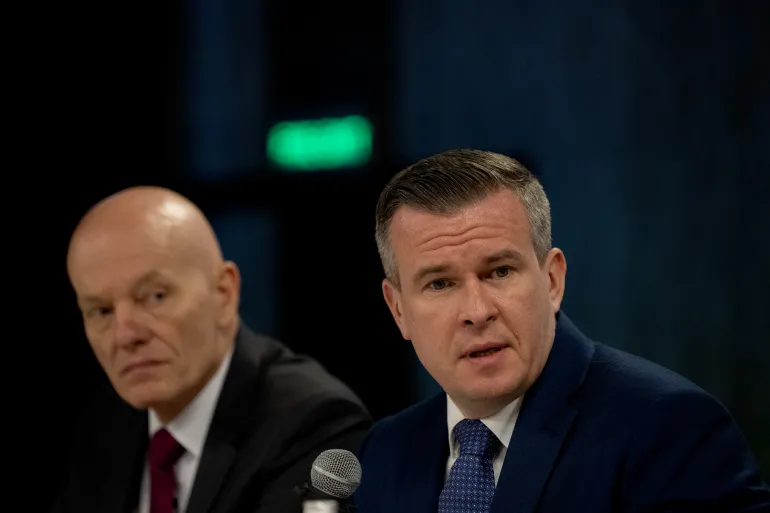



The World Anti-Doping Agency is turning its focus upstream, arguing that tackling the global doping crisis starts not with athletes, but with the networks producing and distributing performance-enhancing drugs — many of which trace back to India.
WADA chief Witold Banka made that case during a visit to New Delhi, where his team is working to deepen cooperation with Indian law enforcement, including the Central Bureau of Investigation (CBI) and cybercrime units.
“We see the problem of production of performance-enhancing drugs (PEDs) – India is the biggest producer of those illegal substances,” Banka told AFP.
“That’s why we collaborate with CBI, with law enforcement, to try to destroy this market and to really protect the lives of athletes and the health of society,” he added.
The approach reflects a broader shift in anti-doping strategy. Since 2022, WADA has expanded its Global Anti-Doping Intelligence and Investigations Network (GAIIN), focusing more on intelligence gathering and coordinated enforcement. That effort has already led to hundreds of raids worldwide, the dismantling of dozens of illicit labs and the seizure of large volumes of banned substances.
For WADA investigators, India’s role is central — not only because of its size, but because of its position in global supply chains.
“We are here because India is the biggest population [1.4 billion] and we see how important it is for the Indian authorities, and we see the need to strengthen the system here – it’s a common interest,” said Gunter Younger, WADA’s head of investigations.
“For now, I see the appetite and willingness from the public authority side [in India] to work with us closely to address this issue. We know it’s not only about the doping of the athletes.”
That last point goes to the core of WADA’s recalibration. Younger, a former cybercrime chief in Germany, argued that the traditional model — centred on testing athletes — is no longer sufficient.
“We always focus on testing, and the whole infrastructure in the last 25 years, the anti-doping community was focusing on testing, and it was OK in the beginning.
“But the criminal networks, they adjust, and they adjust quite quickly.
“The fact that we have, let’s say, under 1 percent hits with testing shows for me we can do better in this way.”
Instead, WADA is pushing what it describes as a top-down strategy — targeting suppliers, intermediaries and enablers.
“Therefore, what we want to do with them is to strengthen their intelligence and investigations, working with the CBI, adopt a top-down strategy.“Go for the criminal networks, and look for the clients, and target the coaches, the doctors that are responsible for providing the PEDs to the athletes, and not do a bottom-up strategy.”



The latest news in your social feeds
Subscribe to our social media platforms to stay tuned