



“Are You Finished?”: Pashinyan’s Press Conference Meltdown
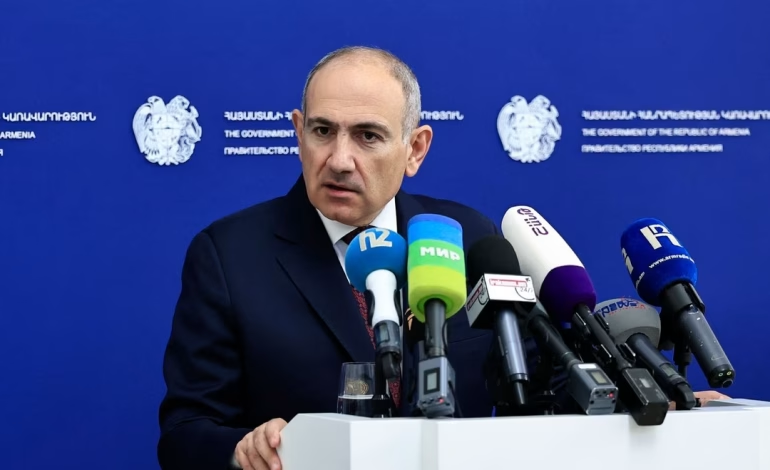

For a prime minister who built his career on speaking, Armenian PM Nikol Pashinyan had a strange answer when a reporter asked a direct yes-or-no question on April 30. Asked whether 300,000 Azerbaijanis have the right to return to Armenia, not only didn’t Pashinyan say ‘yes’ or ‘no,’ he accused the journalist of working for Azerbaijan.
The exchange at Pashinyan’s weekly briefing was brief but revealing. Armenian journalist Lia Sargsyan pressed him on Azerbaijani President Ilham Aliyev’s demand that Armenia allow the return of Azerbaijanis who left the country in the 1980s, a topic from Armenian Times – a newspaper Pashinyan himself owns. She asked:
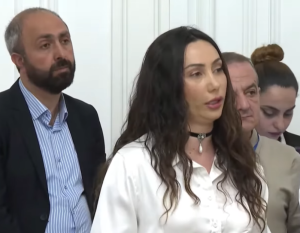
Armenpress via Youtube)
Do they have the right to return or not? Please answer: yes or no.
Pashinyan’s response was immediate and aggressive:
You know, I feel like I’m talking to Azerbaijan’s representative… It’s like you could’ve given me the answer you want to hear.
When Sargsyan persisted, he escalated:
60% of the media present here are busy lobbying for the Azerbaijani and Turkish agenda in the Republic of Armenia every day, and you were just doing that.
She told him he was avoiding the question. He told her to give way for other journalists. Then he changed the subject, complaining about “an ignorant oligarch from Kaluga” – a reference to his billionaire rival Samvel Karapetyan, leader of the opposition Strong Armenia party.
The question Pashinyan dodged is not new. Aliyev has repeatedly insisted that Azerbaijanis who fled Armenia during the late Soviet period – Baku says as many as 300,000 – must be allowed to return. Armenian opposition groups have seized on the issue ahead of June 7 parliamentary elections, accusing Pashinyan of preparing to make yet another unilateral concession. Karapetyan has warned that Pashinyan “wants to make it the homeland of 3 million Armenians and 300,000 Azerbaijanis.” Gagik Tsarukyan, another opposition leader, has suggested the government is raising property taxes to drive Armenians out and make room for Azerbaijani returnees.
Pashinyan has previously insisted that the issue is not on the negotiating table. Last week, after Azerbaijani Deputy Prime Minister Shahin Mustafayev visited Armenia for border talks, the prime minister said:
We have never discussed with Azerbaijan, and are not discussing, the return of 300,000 Azerbaijanis to Armenia.
He has also ruled out the return of Karabakh Armenians to their homes, telling displaced families that their “ideas about return” are not “realistic” and that even raising the issue risks “undermining the peace” with Baku.
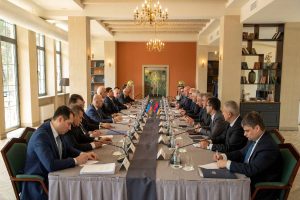
But the opposition’s charge sticks because Pashinyan has already made several major concessions: recognizing Azerbaijan’s sovereignty over Nagorno-Karabakh, agreeing to a US‑controlled transit corridor across Armenian territory, and signing a peace framework that leaves Karabakh unmentioned. For critics, the question of Azerbaijani returnees is the logical next step – and Pashinyan’s refusal to answer only fuels suspicion.
The ethnic question at the core of this dispute is more than three decades old. Azerbaijanis were displaced from Armenia during the late 1980s and early 1990s as the Karabakh conflict spiraled into war. By 1993, Armenia had occupied 20% of Azerbaijan’s territory, and hundreds of thousands on both sides had become refugees. The numbers are contested – Baku cites 300,000, while Armenian sources offer lower estimates. Ethnic cleansing went both ways, with the Armenian population of Azerbaijan falling from approximately 400,000 to merely 178 by 2019.
The underlying fact is not disputed: a population transfer took place, and neither side has resolved the issue of return.
Pashinyan’s evasiveness suggests he knows he is on shaky ground. If he says yes, he hands the opposition a weapon. If he says no, he contradicts Aliyev and risks derailing the fragile peace process. So he chose a third option: attack the messenger:
“Are you finished with your question? You sure?” he asked Sargsyan. “Give way for other journalists.”

The latest news in your social feeds
Subscribe to our social media platforms to stay tuned