





With input from NBC News, CBS News, USA Today, and the New York Times.
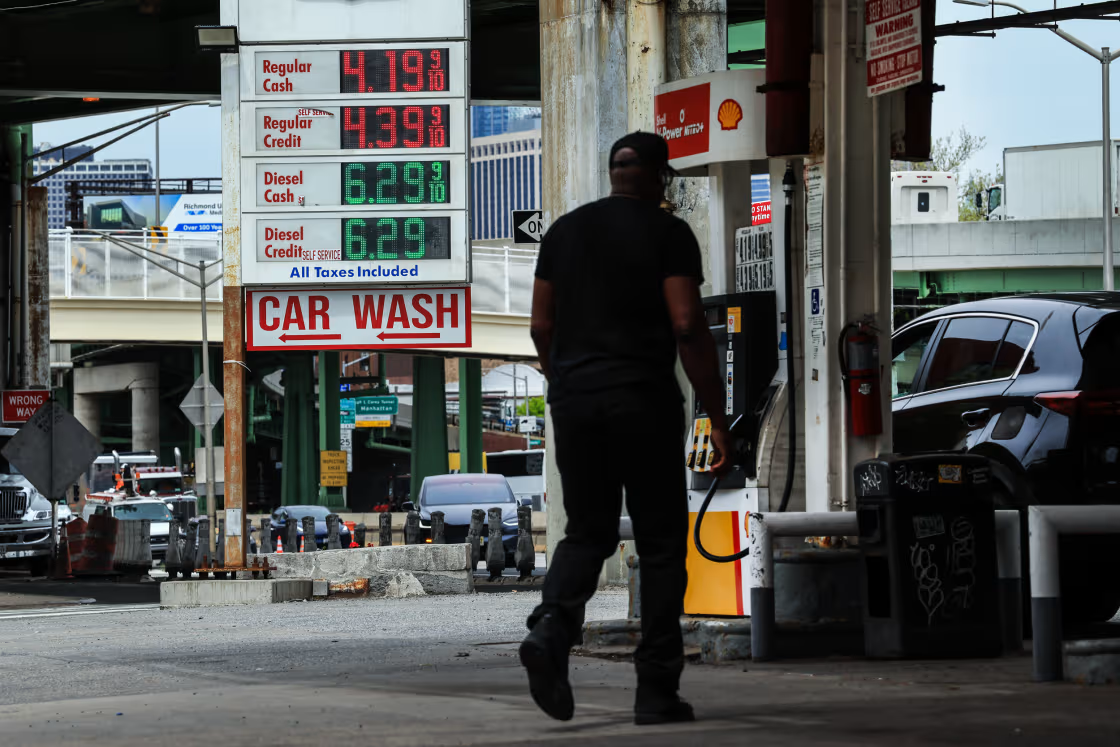
Gas prices just keep climbing. And now they’ve hit a fresh high for the year.
The national average landed at $4.23 a gallon on Wednesday, according to AAA, as the war in Iran drags into its third month with no real breakthrough in peace talks. Oil markets are jittery, supply routes are strained, and drivers are paying the price – literally.
A big part of the surge comes down to the Strait of Hormuz, one of the world’s most critical oil chokepoints. With both the US and Iran effectively restricting traffic through the narrow passage, the global flow of crude has taken a hit. Less supply, more uncertainty – prices shoot up.
Brent crude, the global benchmark that heavily influences US fuel costs, is hovering around $114–$115 a barrel. That’s a sharp jump from mid-April and not far off recent highs. The ripple effect has been fast. Gas prices have climbed more than $1.25 per gallon since before the war began in late February.
The increase hasn’t been smooth either. Just a day earlier, prices jumped seven cents – the biggest one-day spike in over a month.
There’s also some seasonal pressure baked in. Refineries typically go offline for maintenance this time of year, right as demand starts picking up ahead of the summer driving season. Add a global conflict on top, and the squeeze gets tighter.
Gas stations, for their part, have tried to soften the blow – at least temporarily. Some have been cutting into their own margins to keep prices from breaking too far above $4. But that strategy has limits.
“This is the most serious squeeze we’ve seen for retailers since 2020,” said Tom Kloza, a longtime energy analyst.
In other words, they can’t hold the line forever.
So far, the pain hasn’t hit everyone equally. Analysts at Bank of America say lower-income households are feeling it the most, while others still have some cushion. Compared to past spikes – like in 2008 or the early 2010s – fuel isn’t eating up as much of the average household budget yet.
But that could change. If higher fuel costs start pushing up grocery bills, utility prices, and other essentials, the impact spreads quickly.
There’s also a bigger question hanging over all this: why are US gas prices soaring when America produces so much of its own oil?
The answer is simple, even if it’s frustrating. Oil is priced globally. It doesn’t matter where it’s pumped – Texas, Saudi Arabia, or offshore rigs – what matters is what buyers are willing to pay. If supply tightens anywhere, prices rise everywhere.
“Everybody’s competing for the same barrel,” as one analyst put it.
Even regions within the US feel it differently. The West Coast, for instance, relies more heavily on imported crude, making it especially vulnerable. In California, prices are already pushing close to $6 a gallon.
Still, this isn’t a repeat of the 1970s oil crisis. There are no nationwide shortages or rationing. The US produces a lot of oil and has more flexibility than it did decades ago.
But that doesn’t make it painless.
For now, relief looks distant. Even with a fragile ceasefire earlier this month, traders are pricing in ongoing risk. Shipping insurance costs are up. Infrastructure in the region has been damaged. And there’s always the chance the conflict flares up again.
That uncertainty keeps a premium baked into oil prices – and, by extension, what drivers pay at the pump.
“There’s no going back to what we had,” one economist said.
At least not anytime soon.



The latest news in your social feeds
Subscribe to our social media platforms to stay tuned