

EXCLUSIVE: Doors Beat Dollars: Why GOP’s ‘Safe’ Seats Aren’t Safe Anymore

The 2026 midterms are still months away, but the warning signs for Republicans are already blinking in places nobody expected. Traditionally safe red districts, the kind incumbents used to sleep through, are showing real vulnerability. And according to Mark Meckler, president of Convention of States Action, the party is walking into a trap by relying on the same old playbook while the ground has shifted underneath them.
Meckler sat down with the Wyoming Star to explain what he is seeing, why the ground game now beats paid media, and why a Supreme Court redistricting ruling could scramble the map even further.
Asked what specific indicators suggest safe districts are becoming more vulnerable in 2026, Meckler pointed straight at voter migration.
“The biggest tell is voter migration. Any ‘safe red’ district that has absorbed double-digit population growth since 2020 — the exurbs of Phoenix, the Atlanta and Houston collars, the I-4 corridor in Florida, and growing pockets of the Mountain West — is now demographically a different district than the one that elected the incumbent.”

He added that softening generic ballot numbers, declining straight-ticket voting, and incumbents spending heavily without moving their own numbers all point to a map that looks safe on paper but is genuinely competitive on the ground.
That demographic churn is also changing how campaigns actually reach people. Meckler argued that door-to-door engagement has gone from helpful to decisive in high-growth suburban areas. New residents in those places, he said, don’t have established political identities tied to the local party, they don’t watch local broadcast TV, and they screen unknown calls and texts.
“The only consistent way to actually reach them is at the door, by a neighbor,” Meckler said. “We see it in our own data at Convention of States: a single quality door-knock from a trained volunteer outperforms thousands of dollars in digital ads on persuasion, and dramatically outperforms it on turnout among low-propensity voters — which is exactly the universe that decides modern midterms.”
So why is the ground game suddenly more decisive than broad-based messaging? Meckler’s answer was blunt. Broad-based messaging assumes a shared media environment that no longer exists. Voters today live in fragmented information silos (podcasts, group chats, niche YouTube channels, algorithmic feeds) and a 30-second TV spot reaches a smaller and older slice of the electorate every cycle.
“The ground game cuts through that fragmentation because trust is local: a neighbor at your door is a higher-credibility messenger than any candidate on a screen,” he said. “When the persuadable universe is smaller, more skeptical, and harder to reach, the campaign with the better field operation wins. That’s the whole ballgame in 2026.”
Despite that reality, Meckler sees the same strategic mistakes over and over. He listed three recurring problems. First, treating voter engagement as a paid-media buy instead of a relationship, dropping mail and ads in October on people who have never been spoken to in person. Second, optimizing for turnout among already-likely voters instead of doing the harder work of persuading and mobilizing low-propensity voters who decide close races.
Third, building a field operation from scratch ninety days before the election, when the only field organizations that actually move numbers are the ones that have been embedded in their communities for years.
“Campaigns keep treating volunteers as a cost center; they’re actually the most important asset on the balance sheet,” Meckler said.
His prescription for parties is to invert the spending pyramid. The two parties currently spend roughly 70 to 80 percent of their budgets on paid media and a fraction on field; he believes that needs to flip, or at least move toward parity. Build permanent, year-round, neighborhood-level volunteer networks instead of rented turf operations that show up in September and disappear in November. Push decision-making and resources down to the precinct level, where local volunteers actually know their neighbors.
“Recognize that durable political change is built one conversation at a time — doors beat dollars, and the party that internalizes that first will own the next decade,” he said.
That conversation is happening against a volatile backdrop. The Supreme Court’s ruling on the Voting Rights Act, which declared Louisiana’s congressional map an unconstitutional racial gerrymander, has thrown redistricting into chaos in the middle of a heated primary season. The decision is likely to modestly improve Republicans’ fortunes ahead of the midterms, giving them a slight edge in the redistricting wars. But how big an edge remains to be seen. Republicans are still facing significant headwinds in their quest to retain control of the House, with the war in Iran driving gas prices up and President Trump’s approval ratings down. And the ruling all but guarantees that the redistricting arms race will stretch into the 2028 election, with both parties likely to redraw their maps again to eke out a partisan advantage.
In Louisiana, the court directly struck down the current map, but Governor Jeff Landry, a Republican, gave no indication of any immediate actions in a statement. With a May 16 primary looming — and early voting set to begin this weekend — drawing new congressional boundaries would require a breakneck timetable and perhaps new election dates. Republicans in several other states pointed to the ruling as a justification for redrawing maps, including in Florida, where state lawmakers approved a new map creating up to four Republican-leaning seats. The map now awaits a signature from Governor Ron DeSantis, a Republican who is expected to sign it.
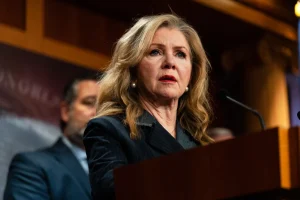
In Tennessee, Senator Marsha Blackburn, a Republican who is running for governor, called on the legislature to reconvene this year and pass a new map that eliminates a majority-Black district in Memphis. Blackburn said:
“I’ve vowed to keep Tennessee a red state” and pledged to “do everything I can to make this map a reality.”
But Tennessee lawmakers could face difficulties in carving out further partisan advantage. They previously resisted the wave of gerrymandering that swept through other states. When asked of his plans, the state’s Republican House speaker, Cameron Sexton, said: “We are reviewing the recent opinion as I have conversations with the White House and other individuals.”
There is some skepticism that a new Republican district could be drawn in the Memphis area without endangering at least one other Republican-held seat nearby. Still, several Democrats said they were taking the possibility seriously, given how aligned Tennessee Republicans are with the Trump administration. Representative Steve Cohen, the Tennessee Democrat who holds the seat, said:
“I’ve always — since I heard the first opinion on this case — thought this was a possibility, and it’s unfortunate,” adding that the General Assembly could “draw some pretty bizarre maps.”
His primary opponent, State Representative Justin J. Pearson, has also raised alarm, saying he would be reaching out to civil rights lawyers to see what options remained.
Other states that Democrats fear could be targeted include Alabama and Mississippi. Although Mississippi’s primary was in March, the Republican governor recently called a special session to consider new judicial lines. In Alabama, Governor Kay Ivey indicated in a statement that she would not call a special session to draw new maps, citing a current court order prohibiting new congressional districts until after the 2030 census.
Democrats are more concerned about the long-term implications than about the midterms themselves. The conservative majority opinion cast the ruling as a limited one that preserved a central tenet of the Voting Rights Act. But the court’s liberal wing, in dissent, argued that the justices had effectively dismantled the landmark civil rights law. Some Democrats saw the ruling as essentially gutting the ability to challenge gerrymandered districts on racial grounds. Without those guardrails, some Democrats fear 2028 will become a worst-case scenario, with Republican-controlled states across the country redrawing their maps to maximum partisan advantage. An analysis by The New York Times last year found that all told, Democrats would be in danger of losing around a dozen majority-minority districts across the South if the court struck down part of the Voting Rights Act.
As a result, Democrats are gearing up for a battle. In Colorado and New York, they have begun to explore the process of changing state laws and redrawing their maps before the next House races in two years. On Wednesday, Governor Kathy Hochul of New York reiterated her support for drawing new maps.
“I’m working with the Legislature to change New York’s redistricting process so we can fight back against Washington’s attempts to rig our democracy,” Hochul, a Democrat, said in a statement.
Governor J.B. Pritzker of Illinois, also a Democrat, hinted at future action during a news conference, telling reporters, “We have options.”
Elsewhere, Democratic strategists have pointed to Oregon and New Jersey as states that could draw new maps for partisan advantage, though they would have to undertake similar processes as Virginia and California and get permission from voters through referendums. So far, Republicans have been less direct about their plans. Lieutenant Governor Burt Jones of Georgia, a Republican running for governor, said in a statement that he would “fully support redrawing our state’s legislative maps in compliance with today’s decision” — but he did not say when. Both Lieutenant Governor Pamela Evette and Representative Ralph Norman, Republicans from South Carolina running for governor, called on their state to redraw the sixth congressional district held by Representative Jim Clyburn, a Democrat. Norman also did not specify whether redistricting should happen now or ahead of 2028.
“What happened today is a turning point,” Norman said in a statement. “It means states like ours can finally take a hard look at districts that were designed to be untouchable.”
The primary calendar is the principal impediment to taking immediate action. Beginning a fresh redistricting process in states where early voting has begun would amount to tossing legally cast votes, which would likely invite fresh court challenges. It also could create chaos and confusion among voters and candidates. Similarly, states where candidate filing deadlines have passed would have to pass new laws to change those dates if they try to redraw their maps this year. In other states, congressional maps are already so heavily gerrymandered, especially after this year’s back-and-forth battle, that it would be difficult to carve out further partisan advantage.
One silver lining for House Republicans facing an increasingly grim midterm cycle: they have got money. Democrats are still raking in big hauls and are outpacing the GOP in most key Senate races, despite having an uphill battle to flip the chamber. But in the far more competitive House map, vulnerable Republicans are also raising millions of dollars, creating relative parity in the most competitive battlegrounds, a marked difference from past cycles like 2018, when Republicans were outraised by Democrats in most competitive House districts.
That year, 36 of the top 50 House fundraisers were Democrats, according to FEC data. So far this cycle, top fundraisers are split roughly evenly between the two parties. Representatives Mike Lawler of New York and Brian Fitzpatrick of Pennsylvania, the only two Republicans seeking reelection in districts won by Kamala Harris in 2024, are among the top fundraisers of any vulnerable incumbents of either party, respectively bringing in $6.7 million and $5.4 million so far this cycle.
That suggests Republicans are going to be playing a lot more defense than offense this cycle. But they might be better positioned in seats they are defending. House GOP incumbents in particular have announced strong hauls, keeping them ahead of or within striking distance of their Democratic challengers.
“Democrats used to count on a cash advantage to hide their radical policies from voters, but that crutch is now gone,” NRCC spokesperson Mike Marinella said in a statement. “This all points to the fact that this cycle is not a repeat of 2018, and Republicans are well-positioned to defy history and grow our majority in Congress.”
Candidate fundraising in many competitive districts is still likely to be dwarfed by outside spending. The Congressional Leadership Fund, which supports House Republicans, announced a $153 million preliminary ad buy targeting competitive districts this week; its Democratic counterpart, House Majority PAC, pledged $272 million in ad reservations of its own. Other potential players include Trump’s MAGA Inc. super PAC, which had nearly $350 million cash on hand at the end of March, and moneyed interest group super PACs linked to cryptocurrency and AI that have accumulated tens of millions of dollars and are already spending in congressional primaries. But campaign cash still matters: candidates have direct control over how it is used, and campaigns get lower rates than super PACs on television ads.
Meckler’s argument, though, cuts through all that spending noise. If doors beat dollars, then all the super PAC money in the world cannot replace a volunteer who has been knocking on the same block for two years. The question heading into November is whether Republicans learned that lesson in time.


The latest news in your social feeds
Subscribe to our social media platforms to stay tuned