





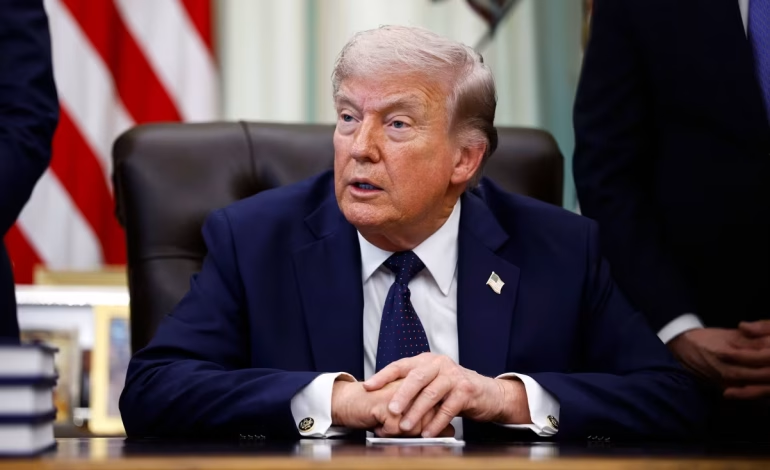

A post-Vietnam law puts a 60-day clock on the use of military force without congressional authorization. The war in Iran—launched by the Trump administration without seeking congressional approval—reaches that mark on May 1 under the War Powers Resolution. But instead of seeking a vote to authorize the war, the Trump administration argues the ceasefire pauses the clock.
“We are in a ceasefire right now, which our understanding means the 60-day clock pauses or stops,” Defense Secretary Pete Hegseth told senators on Thursday.
Sen. Susan Collins, the Maine Republican, disagrees. She changed positions to vote with Democrats Thursday in their latest unsuccessful attempt to remove U.S. armed services from hostilities. “The 60-day deadline,” she said, “is not a suggestion; it is a requirement.”
Other Republicans have also said the war needs to be authorized. “I will not support continued funding for the use of force without Congress weighing in,” said Utah Sen. John Curtis. He has been in talks with some fellow Republicans about pushing a war authorization that would more clearly delineate objectives. But neither the White House nor the Pentagon has said how much money will be needed or officially asked for it.
The War Powers Resolution requires the president to notify Congress within 48 hours of introducing armed forces “into hostilities.” Trump made that notification on March 2. Congress must authorize the use of force within 60 days of receiving that notification, or the military action must be terminated. The president can extend the clock for another 30 days only if needed to safely withdraw troops. Trump has said he won’t be rushed into a bad deal to end the war.
There is confusion over the exact deadline. Some believe the 60-day clock started from the date hostilities began (making the deadline April 29), while others cite the law’s text to argue it is 60 calendar days from the official notification (May 1). Many Republican lawmakers believe, like Hegseth, that the ceasefire period does not count toward the deadline. Rep. Brian Fitzpatrick told CNN he is ready to force a War Powers vote if and when the ceasefire ends.
The law has never been used to end a military action, and courts have shied away from getting involved. Multiple presidents, including Trump, have argued the law itself is unconstitutional. Richard Nixon vetoed it; Congress overrode his veto. Vice President JD Vance called it “fundamentally a fake and unconstitutional law” before the Iran war.
Previous presidents found creative ways to continue military adventures beyond 60 days. Reagan reached a deal with Congress to keep Marines in Lebanon. Obama redefined “hostilities” to keep the U.S. involved in Libya. Clinton argued that Congress had effectively given permission by authorizing money for Kosovo. The Trump administration has so far declined to say how much the Iran war will cost or to ask Congress for a supplemental appropriations bill.
Republican leaders have mostly kept their party together on Iran war powers votes, but multiple GOP sources acknowledge the 60-day mark could shift that unity. Some institutionalists say Congress has a responsibility to vote on any war that goes beyond 60 days. Even Republicans who support the war could be reluctant to take a vote that might become a political liability in the midterms. And some who have been critical of the war have refused to vote against Trump, anxious about what that rebuke would look like to adversaries—and what retribution it might provoke from the president.


The latest news in your social feeds
Subscribe to our social media platforms to stay tuned