
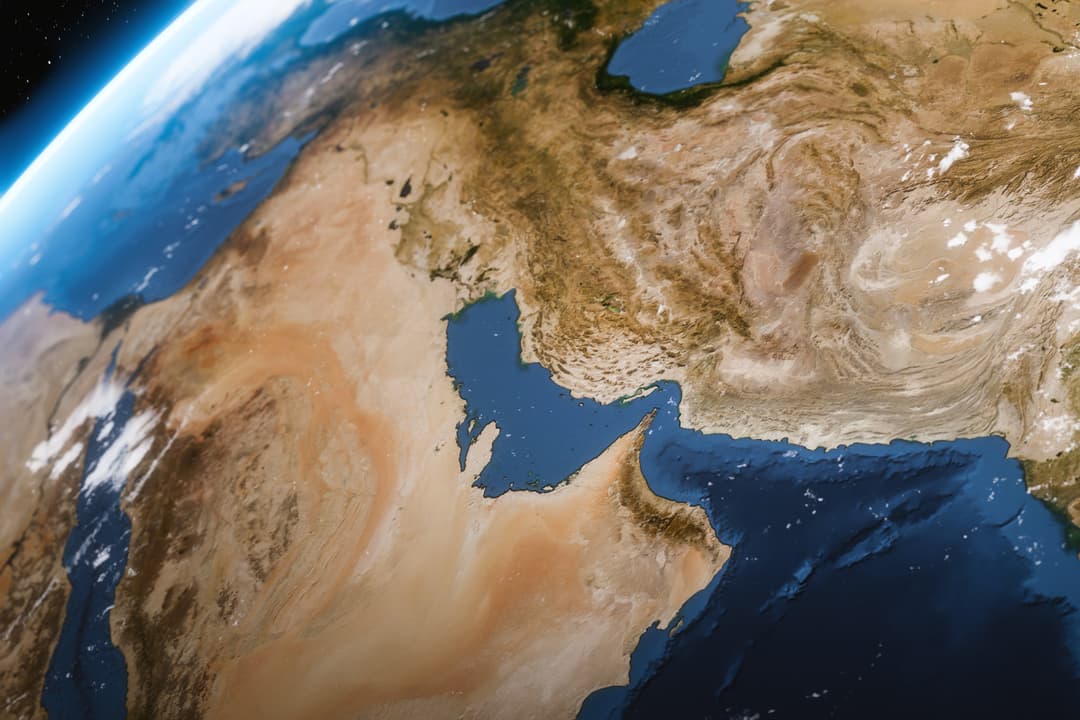
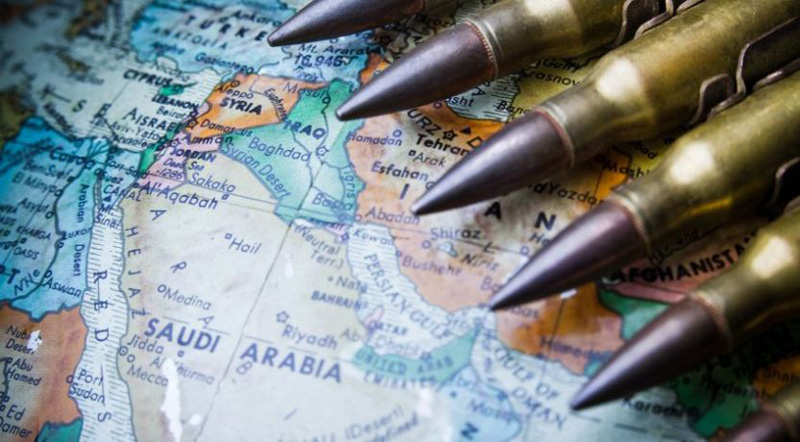
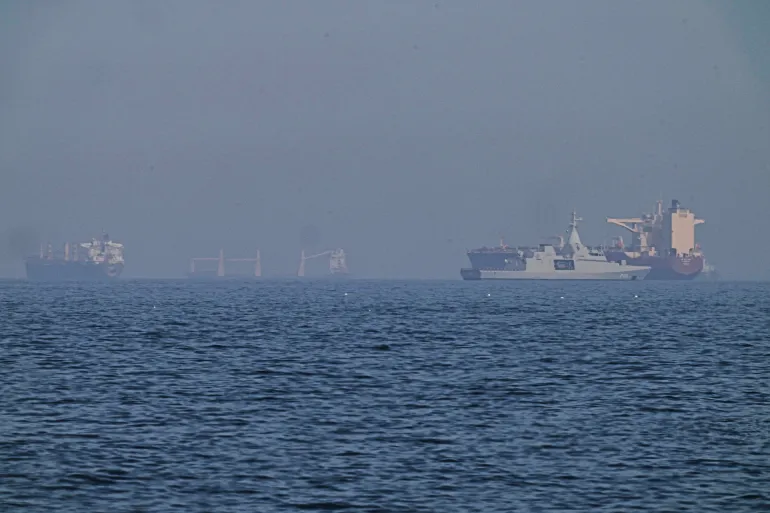
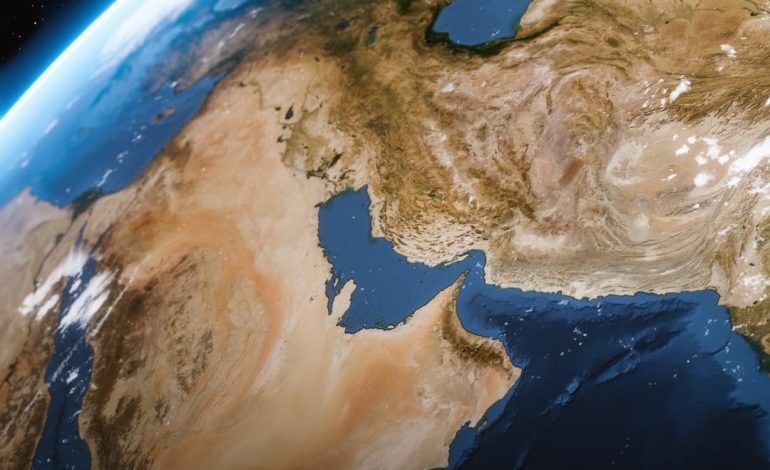

As the Iran War negotiations drag along with no real end in sight almost three months into the conflict, the Middle East is grappling with its political and economic fallout. The region suffered direct retaliation from Iran as a part of its campaign to establish a long-lasting deterrence. The strikes themselves shattered the notion of safety for economic investment as well as tourism confidence. Closure of the Strait of Hormuz directly impacted the Gulf’s energy sector and the fifth of global oil and LNG supply.

Below is a short interview with Dr. Mohammed Nuruzzaman, Professor of International Relations at North South University, Dhaka, Bangladesh:
Wyoming Star: Is the economic and political impact of the Iran War enough to push the Gulf states openly into the war?
Dr. Nuruzzaman: The Gulf states are quietly cooperating with the US in the war on Iran. They provide intelligence, logistics, and allow the US to use their air defense facilities, in addition to hosting US air, naval, and military bases. Yet, a slew of structural, geopolitical, and geoeconomic reasons make them reluctant to openly intervene in a US war against Iran, despite the call for a collective GCC (Gulf Cooperation Council) military response to Iran by the United Arab Emirates (UAE).
The constraints on direct participation are greatly insurmountable. Geographically, the Gulf monarchies are proximate neighbors of Iran and remain highly vulnerable to Iranian retaliation. Iran and the allied Shia militia groups can easily target and destroy their oil infrastructure, desalination plants, sea- and airports, inflicting heavy damages leading to a total economic collapse. The 2019 Iranian attacks on Saudi oil facilities already demonstrated how vulnerable Gulf energy systems are.

A regional all-out war more seriously threatens the Gulf states’ finance, tourism, AI and technology, and the possibility of becoming global investment hubs, effectively halting their development plans to diversify away from oil and gas. That might be the reason why they have recently pursued détente with Iran. Saudi Arabia and the UAE have shifted toward de-escalation through Chinese diplomatic mediation. Open intervention alongside the US would destroy that diplomatic track and could lock them in permanent enmity and escalation with Iran. The best diplomatic choice for the Gulf rulers appears to balance between powers rather than directly joining an anti-Iran coalition outright.
There is also a pervasive doubt in the Gulf states whether the US can truly protect them if Iran decides to retaliate massively. The US inability to defeat Iran in the ongoing round of war makes the doubt stronger. Hosting US bases has already made them targets for Iranian retaliation, notwithstanding US security commitments. This creates a strategic dilemma: they need the US, but open participation in an American war against Iran increases their risk exposure.
Wyoming Star: Can the Gulf states pressure both Iran and the US to finally make a deal?
Dr. Nuruzzaman: Yes – to a degree the Gulf states hold the tools to pressure the US, and Iran to negotiate, but they cannot force the two warring parties into a deal. They have certain leverage over both sides simultaneously, such as US dependence on Gulf bases, energy stability, and financial coordination, while Iran needs calmer relations with them to reduce isolation and Western sanctions pressure.
Perhaps, their strongest tool is mediation, not coercion. Oman and Qatar, in particular, host Iran – US nuclear negotiations, transmit proposals, help lower mistrust, create and offer economic incentives. For that reason, these two Gulf Arab states are often more effective than larger powers in diplomacy; both states also maintain working relationships with Iran and the US.
One major obstacle to exercise pressure is the lack of a collective strategic identity. The Gulf states make no single strategic bloc. Saudi Arabia and the UAE, for example, pursue contradictory strategic objectives and support opposing parties in Yemen and Sudan. The UAE often favors a harder line on Iranian regional activity, while Qatar prioritizes mediation and balancing, and Oman strongly favors dialogue and neutrality. Bahrain is more security-aligned with the US and Saudi Arabia. The GCC, as a whole, is fragmented on Iran rather than unified.
Still, a few levers counts. If there is a will, the Gulf states can influence American calculations by restricting operational access to bases, publicly opposing escalation, reducing overt political and diplomatic support, and emphasizing economic rationale. The US understands that a major regional war becomes far harder without Gulf logistical and political support. They can also push Iran to go for a deal exactly because Iran wants sanctions relief, trade access, functioning Gulf commerce, and stable maritime relations. Saudi–Iran rapprochement already showed that Arab engagement can alter regional incentives.
At the end of the day, the Gulf states suffer a core limitation, stemming from Iran–US incompatible strategic goals – the US wants limits on Iran’s nuclear and regional capabilities, while Iran wants sanctions relief, strategic autonomy, and reduced, if not total, US withdrawal from the Middle East. The Gulf states can facilitate compromise, but they cannot erase the underlying reasons for Iran–US conflict and war.
Wyoming Star: Can we expect a future realignment in the Middle East considering the Trump administration’s inability to force a defeat on Iran?
Dr. Nuruzzaman: The Middle East is likely to undergo a major strategic realignment. A war that weakens Iran but fails to break it changes the regional balance from a US-dominated order into a transactional and multipolar system.
Here are the most important shifts the Middle East is likely to experience – the overwhelming US coercive power proves ineffective to win the war, Gulf states move toward ‘post-American balancing,’ China makes enormous strategic gains without firing a single shot, Iran emerges as a new power center despite battlefield damage, and Israel’s regional position becomes more complicated.
For decades, the Gulf monarchies have had the belief that the US may be imperfect, but ultimately it can dominate the region militarily and guarantee their security. The war against Iran, resulting in a ceasefire but no Iranian surrender, has disproved that belief. With Iran proving its capacity to absorb massive US–Israeli strikes, maintain regime continuity, disrupt and control Hormuz, and impose global economic cost by effectively cutting off oil and gas supplies through the Hormuz, there has been a strategic reawakening in the Gulf states. They now conclude that the US cannot simply impose outcomes anymore. And the lesson for them is: depending exclusively on the US creates vulnerability without guaranteeing protection. Saudi Arabia, the UAE, and Qatar are already moving away from total dependency on the US. A failed Iran war accelerates that trend.
For China, US’ failed Iran war reinforces the message that China is a ‘pillar of stability’ compared to an aggressive and erratic US That does not mean China replaces the US quickly in the Gulf or the Middle East region. But Beijing looks set to become the preferred economic partner, infrastructure developer and guarantor, biggest energy customer as usual, and diplomatic broker.
One spectacular reality the Iran war creates is that Iran has emerged victorious by not losing the war, since the post-1979 Islamist regime has not collapsed, nuclear capability survives in some form, and US war aims remain unachievable. Iran’s real leverage is not necessarily missiles, drones or armed proxies, but the ability to resist the global military behemoth – the US That changes regional perceptions – Iran becomes less seen as isolated, and more as structurally unavoidable. States across the Middle East, especially the Gulf states, may increasingly converge on one point – you cannot remove Iran, so you must accommodate it and accept its influence.
For Israel, the war against Iran has proved a loss project. Before the war, Tel Aviv was making good progress in developing close ties with some Gulf states through the framework linked to the Abraham Accords. The war on Iran has destabilized the Gulf, producing a backlash against Israel. Gulf publics are now more opposed to the US and Israel, Arab governments have become more cautious, normalization has slowed down, and Arab leaders feel more uncomfortable aligning with the anti-Iran US-Israel bloc. Israel’s continued military operations in Lebanon, despite a ceasefire in existence, make the political situation even worse, seriously affecting Arab psychology. That means relations with Israel become quieter, colder, and more transactional.
To conclude, a major outcome of the Iran war is the collapse of old binaries, such as pro-American vs. anti-American, Sunni vs. Shia blocs, resistance vs. normalization camps. Instead, states in the Middle East are more likely to prioritize regime survival, energy stability, economic diversification, logistics, AI, and investment flows. That means the region becomes less about ideological camps and more about flexible survival coalitions, making efforts to maintain regional peace and stability.



The latest news in your social feeds
Subscribe to our social media platforms to stay tuned