
EXCLUSIVE: The Middle East. A Stage and the Victim of the Iran War. Part 1.
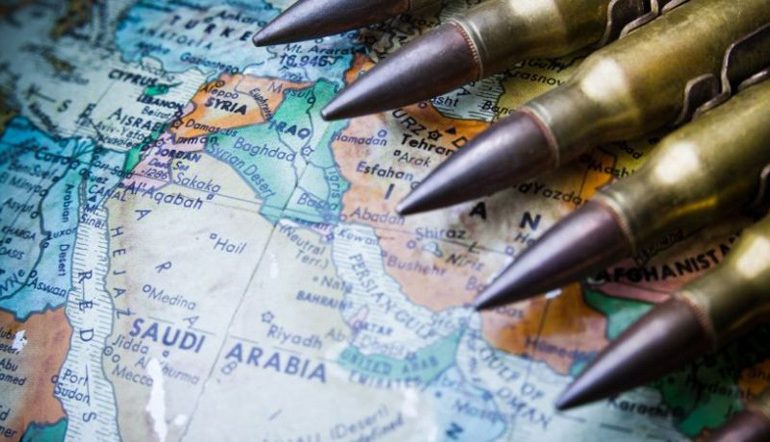


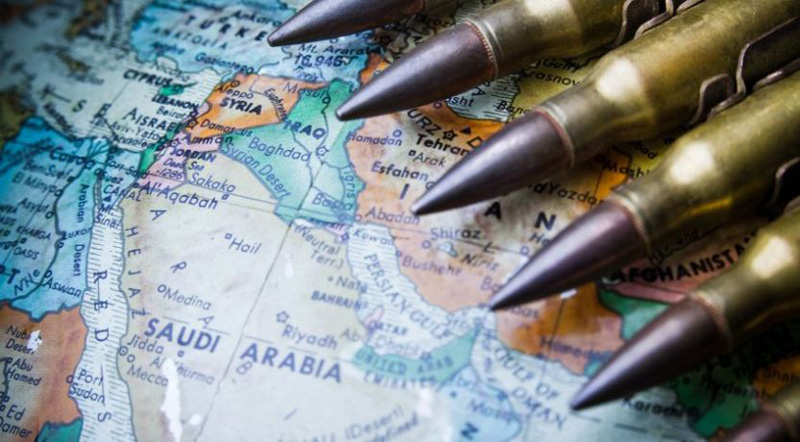
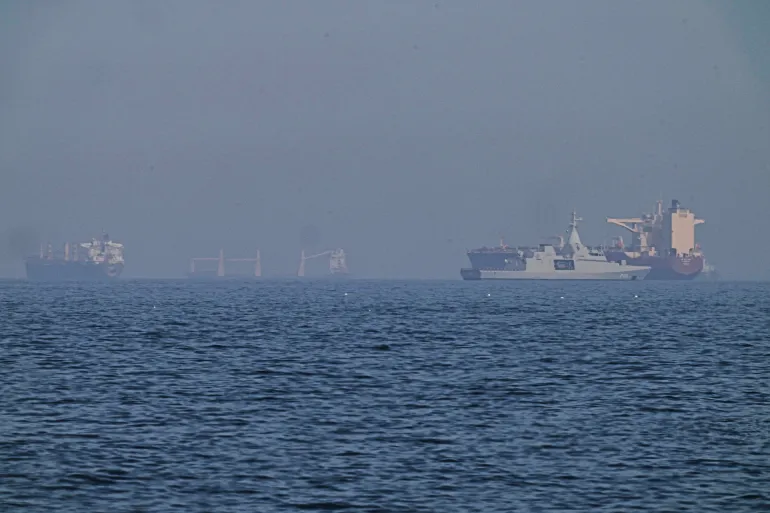
Before dawn on February 28, 2026, Israeli jets and long-range missiles streaked across Iranian skies in Operation Lion’s Roar. Within hours, Washington started its own Operation Epic Fury. Supreme Leader Ali Khamenei, along with around 50 other top officials, was taken out. Israel repeated June 2025 strikes on nuclear facilities at Natanz and Isfahan. Iran retaliated, hitting US bases across the Gulf and a US diplomatic facility in Dubai and shutting the Strait of Hormuz, trapping roughly a fifth of global oil and LNG flows.

The war became regional in all but name. By early April, more than 3,500 Iranians were dead, including 1,600 civilians, and 3.2 million were internally displaced. The US has confirmed 15 soldiers killed and 538 wounded. Israel has lost 22 soldiers and reports more than 8,600 injured. Lebanon – the often-forgotten front – has suffered over 3,000 dead. Across the Gulf, Iranian missiles and drones have struck airports, hotels, desalination plants, and energy infrastructure in Saudi Arabia, the UAE, Qatar, Kuwait, Bahrain, and Oman.
A ceasefire on April 7, brokered by Pakistan, did not open the strait that moves a fifth of the world’s oil. Diplomats came and went from Islamabad; Vice President JD Vance and Iran’s Parliament Speaker sat across a table for 21 hours. The talks collapsed. Washington imposed a naval blockade. Tehran kept the strait mostly closed. The war is stuck in a strange purgatory – a “neither dead nor alive ceasefire.” As of late May, US Secretary of State Marco Rubio reported “slight progress” in talks, but Iran’s new Supreme Leader, Ayatollah Mojtaba Khamenei, has issued a directive that the country’s near-weapons-grade uranium must stay in Iran – hardening Tehran’s stance on one of Washington’s main demands. Trump has responded by threatening to destroy the stockpile.
So what has been the price so far for the region?
The Gulf’s business model has always rested on a simple promise: stability, speed, openness. The war shattered all three at once. Iranian strikes hit the logistical heart of the Gulf economy – LNG plants, petroleum hubs, ports, airports, and shipping lanes. Qatar’s Ras Laffan complex, the world’s largest LNG export center, took extensive damage, knocking out an estimated 17% of global LNG supply. QatarEnergy’s chief executive said the scale of destruction had “set the region back by 10 to 20 years.” Repairs could take three to five years, costing state-owned QatarEnergy a predicted $20 billion in lost annual revenues. Across the Gulf, damage to over 80 energy facilities may cost up to $58 billion to repair, according to Rystad Energy.
The International Monetary Fund revised its 2026 growth projections for the region downward, estimating economic contractions for Qatar at -14.7%, Kuwait at -4.2%, Bahrain at -3.8%, the UAE at -1.9%, and Saudi Arabia at -1.4%. The World Bank cut its Middle East growth forecast to 1.8%, warning of long-term “scarring” from the war – it had previously estimated 4% growth. The IMF projects a 7% cumulative output loss over five years in the Gulf, with negative effects persisting even after a decade. As one UNDP report put it, the war may have pushed up to four million people below the poverty line across the Arab world and eroded up to a year of human development progress.
Omar Al-Ubaydli, President of the Bahrain Economists Society, draws a historical parallel:
The Gulf countries are no stranger to externally induced regional crises that have far-reaching economic impact. An important example with many parallels to the existing situation is the Iran-Iraq War (1980–1988), which contributed to a period of prolonged economic strain in the entire region. Despite this experience, the current crisis has generated unprecedented damage stemming from the much higher levels of economic integration we see today – both globally and in terms of the Gulf countries’ connectedness to other economies, beyond the dozens of fatalities and casualties caused by the conflict.
Dr. Al-Ubaydli highlights the particular vulnerability of the Gulf’s modern economic model:
The Gulf countries have become international civil aviation and tourism hubs, as well as transforming into the primary source of energy for China and other critical East Asian economies. Accordingly, the airspace closures and maritime disruptions caused by the war have severely damaged the Gulf economies, in addition to the direct material damage associated with the targeting of their energy infrastructure.
There are, however, attempts to salvage the situation:
The importance of geography to their economies is not something that can be altered in a matter of days or weeks, meaning that the extended closure of the Strait of Hormuz is causing significant cumulative damage. Nevertheless, the Gulf countries are also not spectating idly, and have activated a range of emergency measures to relieve the pressure, in addition to making long-term plans that enhance resilience. On the short-term front, measures such as using the Saudi East-West pipeline and exploiting terrestrial links to facilitate imports and exports have been effective, while on the long-term front, alternative pipelines and supply chain options are being developed. However, the benefits of opening the Straits remain high, underlining the Gulf countries’ strong support for a lasting diplomatic solution.
The energy shock is the entry point, but it is not the main disruption. Natural gas accounts for 70% to 80% of the variable cost of ammonia production; within months of a sustained gas shock, fertilizer prices follow. The Gulf accounts for about 30% of global ammonia exports and 35% of global urea exports, the bulk routed through Hormuz. Within roughly two planting seasons, food prices follow the spike in fertilizer costs. The shock that begins in a tanker lane in the Gulf eventually arrives in the price of bread in Cairo and the fertilizer ration of a smallholder in Kenya.
The human dimension is equally stark. In Qatar, hotels and boutiques sit in noticeable silence. At Hamad Port, south of Doha, loading cranes stand paralyzed.
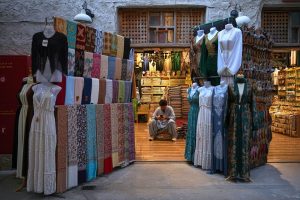
“Nothing you see here would have been possible without the wealth of energy,” Ahmed Helal, a managing director at the Asia Group, told the New York Times. “That is why Qatar is quickly falling into a very challenging fiscal situation.”
The country derives more than 60% of its revenue from gas and gas-related exports. With Hormuz closed, virtually no gas has left Qatar’s shore for more than two months. Lebanon’s Finance Minister expects the war to trigger an economic contraction of between 7% and 10% in 2026, with direct and indirect damage totaling as much as $20 billion. Tourism across the Middle East is hemorrhaging an estimated $600 million every day, with inbound arrivals projected to decline 11% to 27% year-on-year.
Dania Thafer, Executive Director of the Gulf International Forum, maps the uneven damage across the GCC:
All six GCC states have faced significant disruption to their ability to export LNG and petroleum products following the closure of the Strait of Hormuz. Despite years of economic diversification efforts, most Gulf economies remain heavily dependent on hydrocarbon revenues to sustain state spending, economic growth, and ambitious transformation agendas. For decades, these revenues have also financed some of the world’s largest sovereign wealth funds, allowing Gulf states to accumulate vast financial reserves aimed at ‘future-proofing’ their economies for a post-oil era. Yet the closure of Hormuz has exposed how uneven Gulf resilience remains.
Dr. Thafer adds:
Kuwait, Qatar, and Bahrain have faced the highest immediate economic costs due to their limited ability to bypass the strait and their continued dependence on energy exports. Their relatively smaller non-oil sectors also constrain their capacity to offset revenue losses during prolonged disruptions. The long-term sustainability of Gulf economies under an extended Hormuz closure will depend on several factors: the availability of alternative export routes, whether rising global energy prices compensate for declining export volumes, and the scale of financial liquidity available through sovereign wealth funds and state reserves. Based on current reserve levels, economy size, and overall economic flexibility, the UAE, Kuwait, and Qatar appear best positioned to withstand a prolonged disruption, though even they would face mounting fiscal and economic pressures over time.
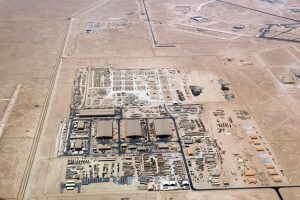
Political implications for the Gulf are no less stark. The war has done something that decades of diplomatic prodding could not: it has forced the Gulf states to reconsider the foundational bargain of their security. For generations, the arrangement was simple. Gulf monarchies hosted American bases, bought American weapons, and aligned themselves with Washington’s regional priorities. In return, they expected protection under the American security umbrella.
As the Iran War expanded, the Gulf states discovered, with brutal clarity, that supporting American military operations carried potentially catastrophic costs. Iranian reprisals targeted their energy facilities, desalination plants, and civilian infrastructure. Gulf rulers watched as the US deployed enormous military resources – Aegis-equipped destroyers and advanced interceptors – to shield Israel from Iranian retaliation, while Gulf states absorbed the payback for enabling American strikes.
“That experience appears to have fundamentally altered their calculations,” notes an analysis in The Hill.
The rift is widening. When Trump announced “Project Freedom” – a US naval initiative to escort commercial shipping through Hormuz – Saudi Arabia refused to grant access to its airspace and bases. Kuwait followed suit. The UAE, meanwhile, has charted a dramatically different course. On April 28, it announced it was exiting OPEC – one of its last institutional links to a Saudi-led framework. It deployed Israeli Iron Dome batteries on its soil, closed its embassy in Tehran, and secretly launched retaliatory strikes on Iran’s Lazan Island just before the April 7 ceasefire. The UAE has effectively declared that the postwar Gulf needs a new organizing principle.
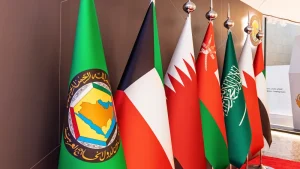
Saudi Arabia has taken a more cautious path. Riyadh kept its channel to Tehran open throughout the war, joined a quadrilateral mediation effort alongside Egypt, Turkey, and Pakistan, and called for a comprehensive settlement. Crown Prince Mohammed bin Salman wants more than a ceasefire. His preferred outcome is a deal that curtails Iranian support for armed proxies and resolves the Strait of Hormuz question on a lasting basis, but without destabilizing Iran to the point of collapse. A broken or cornered Iran, the Saudi calculus runs, would export a different kind of instability incompatible with Vision 2030.
Qatar’s position is the most exposed and the most complicated. It hosts the US Central Command’s largest regional base at Al Udeid—making it a prime target for Iranian retaliation – yet it also shares the world’s largest natural gas reserve with Iran in the North Dome/South Pars field. Doha has tried to navigate between Washington and Tehran for years. The war has made that balancing act nearly impossible.
Yerevan Saeed, Barzani Scholar In-Residence, Director of the Global Kurdish Imitative for Peace at the School of International Service of the American University, frames the Gulf’s dilemma in stark terms:
Prosperity in the Arab Gulf countries depends on stability and security. Many of these states lack strategic depth and remain within range of Iran’s missiles and drones. In the past, US deterrence largely prevented external aggressions and attacks, but that deterrence now appears badly weakened, if not gone.
Saeed outlines the choices ahead:
This leaves Gulf countries with two broad choices: continue to be drawn into a larger war or push Washington and Tehran toward a peaceful settlement. The latter seems more likely than the former. These countries may also seek a non-aggression pact with Tehran to ensure they are not pulled into future conflicts.
If that happens, the presence of US military bases across the region, and their use in any future confrontation, will come under serious question. There are no good options for the GCC. Every path carries a tradeoff, and every tradeoff could bring unintended consequences.

The intellectual architecture of Gulf security is already being rebuilt. In Foreign Affairs, David B. Roberts of King’s College London argued this month that “Gulf leaders must stop waiting for Washington to deliver an outcome that serves them and start shaping one themselves.” The way out, he contends, requires abandoning the assumption that has governed Gulf security for a century – “that security is a commodity to be brokered rather than a capability to be built.” Roberts proposes a grand bargain: a phased US military withdrawal from Gulf bases in exchange for Iranian concessions on nuclear and missile programs, a halt to belligerence, and diplomatic normalization. It would be, he suggests, “the Gulf’s Westphalian moment.”
Whether such a bargain is achievable remains deeply uncertain. The Gulf Cooperation Council was not designed for drone warfare or the possibility of a blocked Strait of Hormuz. There is no joint interception system, no mechanism to oversee the strait, and little precedent for the kind of coordinated military posture that strategic autonomy would require. What is clear is that the status quo ante is gone.


The latest news in your social feeds
Subscribe to our social media platforms to stay tuned