

India links women’s quota push to contentious redistricting plan
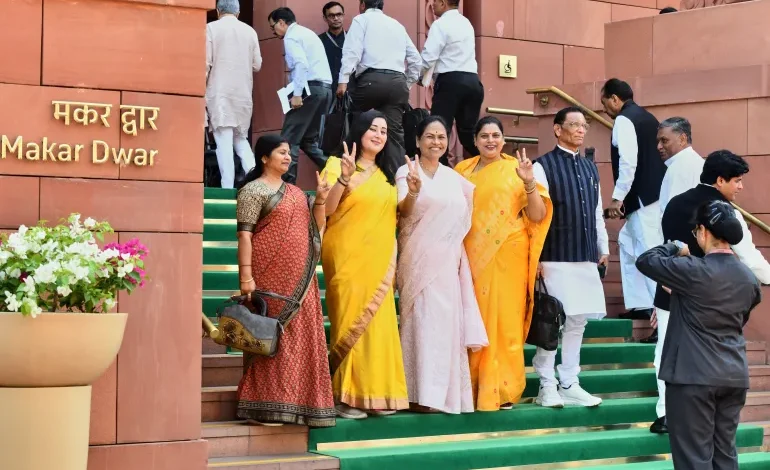

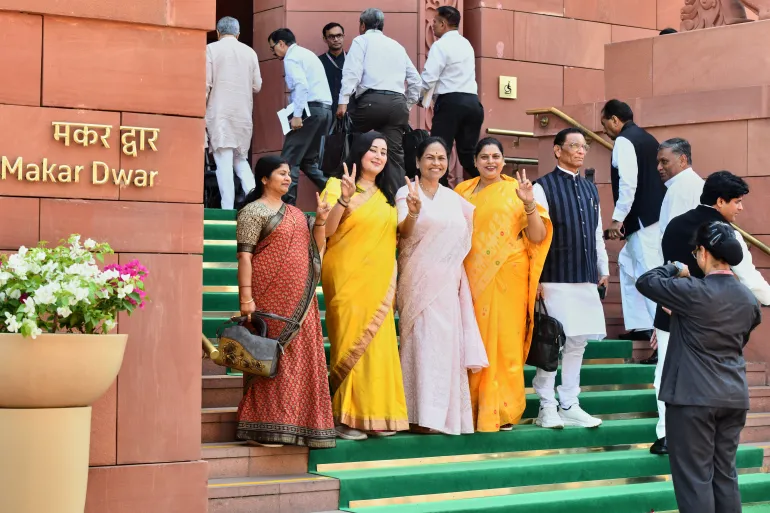
India’s government is moving to fast-track a long-delayed plan to reserve one-third of parliamentary seats for women, but its decision to tie the reform to a major redrawing of electoral boundaries is triggering political pushback.
Prime Minister Narendra Modi framed the effort as a landmark moment ahead of a special parliamentary session on Thursday. “We’re set to take historic steps to empower women,” he said as his government introduced three bills in the Lok Sabha.
Two of the proposals focus on expanding women’s representation in parliament and state assemblies, building on a 2023 law that set a 33 percent quota. The third, however, goes further — proposing a nationwide “delimitation” exercise that would redraw constituency boundaries and significantly expand the size of parliament from 543 to 850 seats.
That linkage has complicated what might otherwise have been a broadly supported reform. While there is cross-party agreement on increasing women’s participation, opposition parties argue that combining it with redistricting risks reshaping the political map in ways that favour the ruling Bharatiya Janata Party.
At present, women make up about 14 percent of India’s lower house. “We are all united to give rightful positions to women in India,” Parliamentary Affairs Minister Kiren Rijiju said, reflecting the general consensus on the principle of representation.
The dispute centres on how new constituencies would be allocated. India’s constitution requires seats to be distributed based on population, but boundaries have not been redrawn since 1971, largely due to political sensitivities.
The government now proposes to base the new allocation on data from the 2011 census, with changes taking effect by the 2029 general election. That approach, critics argue, could shift political weight toward more populous northern states, where the BJP has a strong base, while reducing relative influence in southern states that have seen slower population growth and stronger economic performance.
Opposition leaders have called for the process to be delayed until the results of a new census — launched this month — are available, warning that moving ahead now could distort representation.
The bills face a high procedural bar. Passing them will require a two-thirds majority in both houses of parliament. Modi’s National Democratic Alliance holds 293 seats in the Lok Sabha, short of the roughly 360 votes needed.
The latest news in your social feeds
Subscribe to our social media platforms to stay tuned