

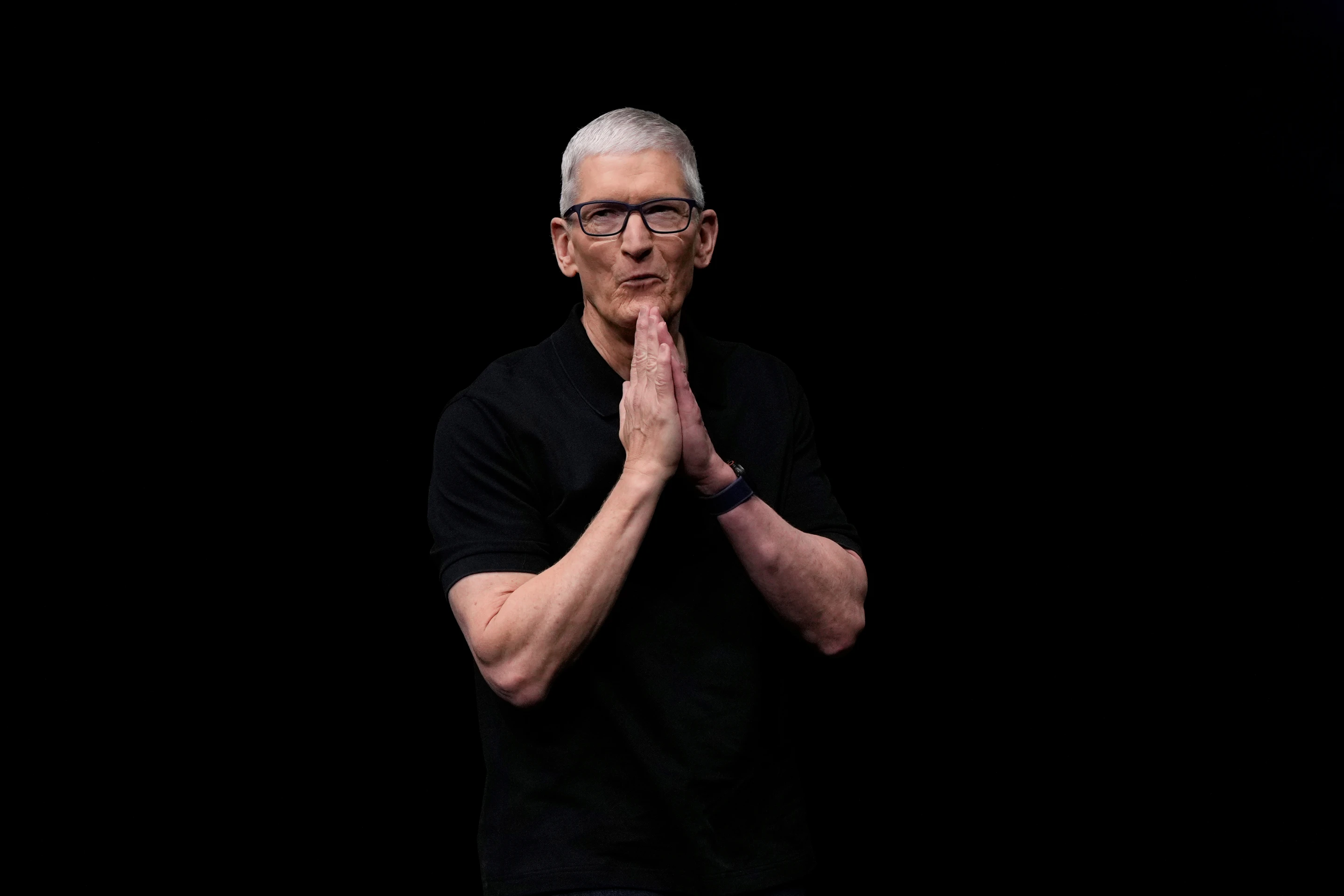



Tim Cook is stepping down as Apple’s CEO, closing a 15-year chapter that turned the company into one of the most valuable businesses in history — and handing over control at a moment when the next era looks far less certain.
Cook, 65, will pass the role to Apple’s head of hardware engineering, John Ternus, on September 1, while remaining as executive chairman. The move mirrors transitions seen at other tech giants, where long-serving leaders step back but retain influence during a strategic shift.
“It has been the greatest privilege of my life to be the CEO of Apple and to have been trusted to lead such an extraordinary company,” Cook said. “I love Apple with all of my being, and I am so grateful to have had the opportunity to work with a team of such ingenious, innovative, creative, and deeply caring people.”
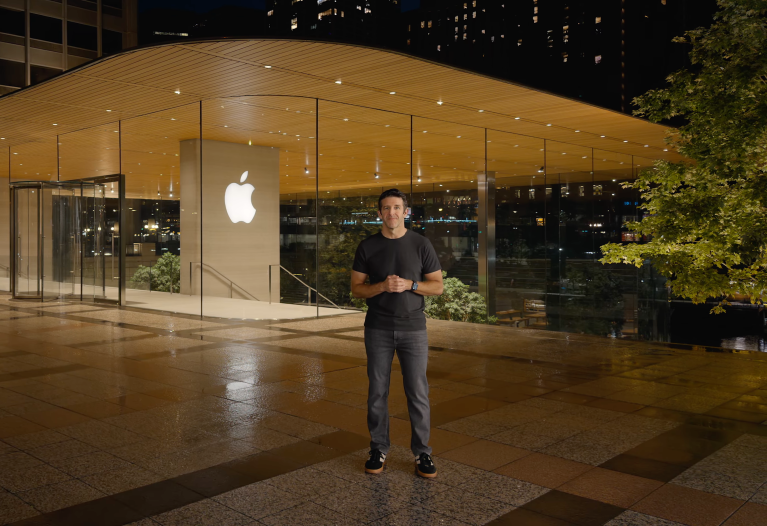
The succession itself looks deliberate rather than disruptive. Ternus, 50, has spent 25 years inside Apple and has led hardware engineering for the past five, overseeing the iPhone, iPad and Mac — the company’s core products. His elevation signals continuity, but also hints at where Apple believes its next phase will be anchored.
“I am profoundly grateful for this opportunity to carry Apple’s mission forward,” Ternus said.
Still, the timing matters. Apple is transitioning leadership just as artificial intelligence is reshaping the tech industry faster than any shift since the original iPhone. And unlike in previous cycles, Apple is not setting the pace.
The company’s slow rollout of AI features — including delays around Siri’s evolution — has already forced it into an unfamiliar position: leaning on external partners like Google to catch up. That dependency marks a subtle but important break from Apple’s long-standing model of tightly controlled, in-house ecosystems.
For Cook, the departure caps one of the most financially successful tenures in corporate history. When he took over in 2011, shortly before Steve Jobs’s death, Apple was valued at about $350 billion. Today it stands near $4 trillion, after becoming the first company to cross the $1 trillion, $2 trillion and $3 trillion milestones.
But that growth story also explains why expectations are shifting. The iPhone-driven model that powered Apple’s expansion is no longer enough on its own, especially as competitors like Nvidia surge ahead on the back of AI demand, pushing into valuation territory Apple once defined.
Analysts see the leadership change as aligned with that reality.
“Cook created a major legacy at Apple but it was ultimately time to pass the torch to Ternus with the AI strategy now the focus,” said Wedbush Securities analyst Dan Ives.
Cook’s tenure was often framed through comparison with Jobs, whose vision defined Apple’s earlier reinvention. He never fully escaped that contrast, but he reshaped the company in a different way — focusing on operational scale, global supply chains and financial discipline. Under his leadership, Apple became less of a visionary disruptor and more of a durable, highly efficient machine.
That shift delivered results. Annual revenue rose from $108 billion when Cook took over to $416 billion today, driven largely by a supply chain strategy that leaned heavily on China’s manufacturing ecosystem. It also made Apple more exposed to geopolitical and technological shifts that are now harder to control.
“Steve Jobs was never going to be an easy act to follow, yet Tim Cook took Jobs’ legacy and transformed Apple into a durable, resilient financial powerhouse,” said Forrester analyst Dipanjan Chatterjee.
The handover now places Ternus at the intersection of that legacy and a more uncertain future. He inherits a company that remains enormously profitable, but one that is navigating a structural transition — from hardware-led dominance to a landscape increasingly defined by AI capabilities and platform ecosystems.


The latest news in your social feeds
Subscribe to our social media platforms to stay tuned