





AlJazeera, the Financial Times, and AP contributed to this report.
Something shifted in 2025. Quietly, but meaningfully.
For the first time, low-emissions power sources covered all the growth in global electricity demand, according to Ember. No extra room left for fossil fuels to expand – at least not last year.
That’s a big deal.
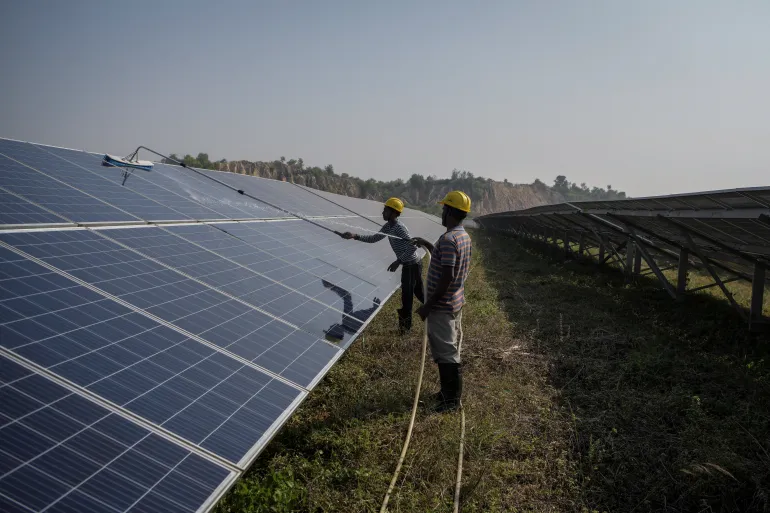
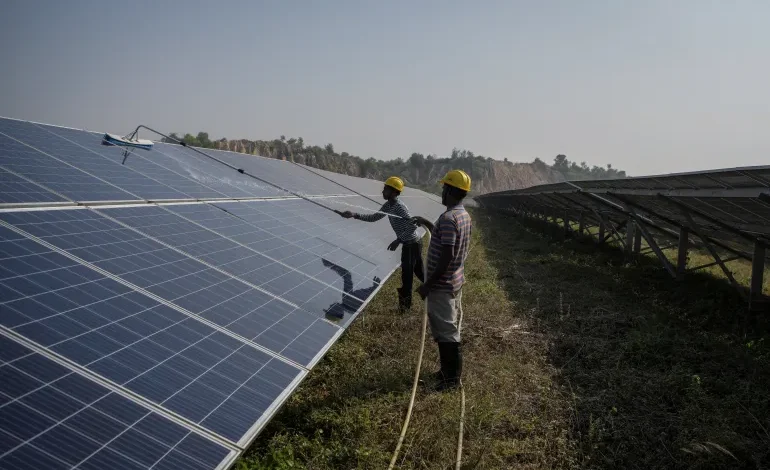
Solar did most of the heavy lifting, accounting for roughly three-quarters of the increase in demand. Wind picked up nearly everything else. Together, they carried the load as electricity use climbed by 849 terawatt hours worldwide.
Step back, and the trend is even clearer. Clean sources – solar, wind, hydro, nuclear, and bioenergy – now generate 42.6% of global electricity. Still not the majority, but closer than ever.
Ember sees this as a turning point.
The argument is straightforward: renewable capacity is growing fast enough to keep up with rising demand. If that continues, fossil fuel use in power generation won’t just stall – it’ll start to fall. By 2035, the group expects coal and gas to lose a noticeable chunk of their market share.
Not everyone’s convinced it’s that simple.
Some analysts warn that one year doesn’t make a pattern, especially when conditions are relatively mild. Power systems are built to handle extremes – heatwaves, cold snaps, sudden spikes in demand. That’s where fossil fuels still tend to step in.
Even Ember acknowledges last year wasn’t unusually demanding. Growth in electricity use came in around 2.8%, pretty much in line with the past decade. Compare that to 2024, when extreme heat drove massive air conditioning use and pushed fossil fuel demand higher alongside renewables.
Still, momentum is building.
Europe has already leaned hard into clean energy, with about 71% of its electricity coming from low-emissions sources last year. And for the first time this century, both China and India – two of the biggest polluters – cut back on fossil-fueled power at the same time.
That matters. A lot.
Globally, renewable growth has been accelerating for years. Most of the expansion in wind and solar has happened in just the past decade, and costs keep falling. Battery storage is scaling up too, helping smooth out the biggest weakness of solar: it only works when the sun’s out.
Even so, the transition isn’t moving fast enough to hit climate goals.
Limiting warming to 1.5°C – the target set in the Paris Agreement – would require a much sharper drop in fossil-fueled electricity this decade. Current projections fall short.
Emissions are improving, but slowly. Carbon intensity per unit of electricity has dropped over the past ten years, and without the recent surge in renewables, global CO₂ output would be significantly higher. That’s progress – but not a finish line.
There’s also a practical constraint.
Fossil fuels still provide stability. Gas and coal plants can run around the clock, something renewables can’t fully replicate yet without stronger grids and more storage. In regions like Europe and parts of Asia, imported natural gas remains a key backup.
Recent geopolitical shocks – like disruptions around the Strait of Hormuz – highlight the tension. High oil and gas prices make renewables more attractive, but they also remind governments why reliable energy supply still matters.
So where does that leave things?
Clean electricity is finally keeping pace with demand. That’s new. It changes the direction of travel. But replacing fossil fuels entirely is a slower, more complicated process.
The shift has started. The hard part is making it stick.



The latest news in your social feeds
Subscribe to our social media platforms to stay tuned