


The Wall Street Journal, CNBC, the Washington Post, CNN, the New York Times, Reuters, and AP contributed to this report.
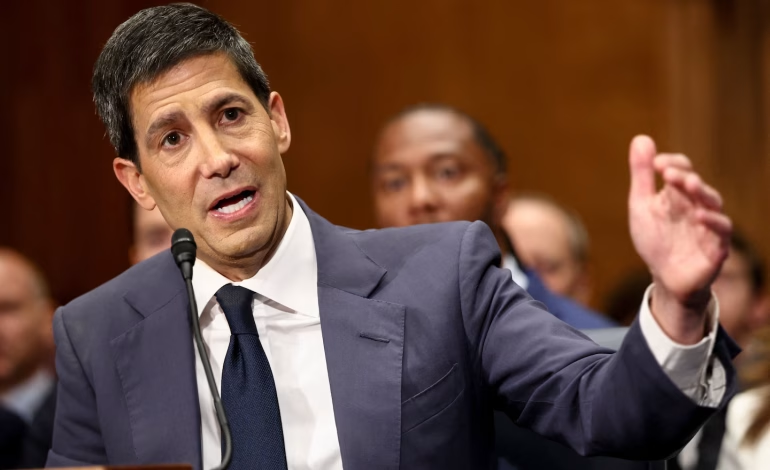
Kevin Warsh walked into the Senate hearing room facing a familiar Washington ritual – and quickly found himself in something far less routine.
The 56-year-old former Federal Reserve governor, tapped to lead the central bank, spent hours fending off sharp questions about his finances, his views on interest rates, and how closely he might align with President Donald Trump if confirmed. He insisted his Fed would stand on its own.
“I’ll be an independent actor,” Warsh told lawmakers, pushing back on suggestions he would bend to political pressure.
That claim was tested almost immediately. Democrats zeroed in on his ties to the White House and a noticeable shift in his stance on interest rates. Once seen as an inflation hawk, Warsh now appears more open to cuts – a position that happens to match Trump’s repeated demands for cheaper borrowing.
Warsh denied any coordination. The president, he said, never asked him to commit to lowering rates. And even if he had, Warsh suggested, the answer would have been no.
Still, skepticism filled the room. Senator Elizabeth Warren didn’t mince words, calling him a potential “sock puppet” for Trump and pressing him over more than $100 million in assets that remain only vaguely described in public disclosures. Warsh declined to detail those holdings, citing confidentiality agreements, though he promised to divest if confirmed.
That didn’t settle concerns. Lawmakers questioned whether undisclosed investments could pose conflicts of interest, especially given his deep ties to Wall Street and ventures in areas like cryptocurrency and artificial intelligence. If confirmed, he would likely be the wealthiest Fed chair in modern history.
The hearing wasn’t just about money. It also turned into a broader fight over the Federal Reserve’s independence – an issue that has hovered over the institution throughout Trump’s second term.
Warsh tried to strike a careful balance. He called independence in setting interest rates “essential,” but added that elected officials questioning the Fed doesn’t automatically threaten that autonomy. At the same time, he hinted that the White House could have more influence over regulatory decisions.
That nuance did little to calm critics, especially with a Justice Department investigation hanging over current Fed Chair Jerome Powell. The probe – tied to a costly renovation project at the central bank – has become a political flashpoint, with some lawmakers warning it’s being used to pressure Powell.
The investigation is also stalling Warsh’s path forward. Republican Senator Thom Tillis has effectively blocked the nomination for now, saying he won’t support any candidate until the probe is resolved. Despite praising Warsh’s credentials, Tillis argued the situation undermines the Fed’s independence.
So even as the hearing played out, the nomination’s future remained uncertain.
Warsh, for his part, used the moment to sketch out how he’d run the central bank. He signaled support for shrinking the Fed’s balance sheet, but cautiously. He also criticized the institution’s habit of signaling future rate moves too clearly, arguing it can lock policymakers into outdated expectations.
On inflation, he was blunt.
“Inflation is a choice,” he said, placing responsibility squarely on the Fed.
That stance could complicate matters if he takes the job. Inflation remains elevated, while the economic fallout from the Iran conflict is pushing energy prices higher – conditions that typically argue against the rate cuts Trump wants.
Meanwhile, Powell’s term as chair is set to expire soon, though he has indicated he may stay on the board. That raises the possibility of an awkward overlap between the current chair and his successor, something not seen in decades.
For now, the process drags on. The hearing made one thing clear: this won’t be a quiet handoff at the world’s most influential central bank.



The latest news in your social feeds
Subscribe to our social media platforms to stay tuned