



Wyoming Makes Deal With NRC To Regulate Uranium And Radioactive Rare Earths

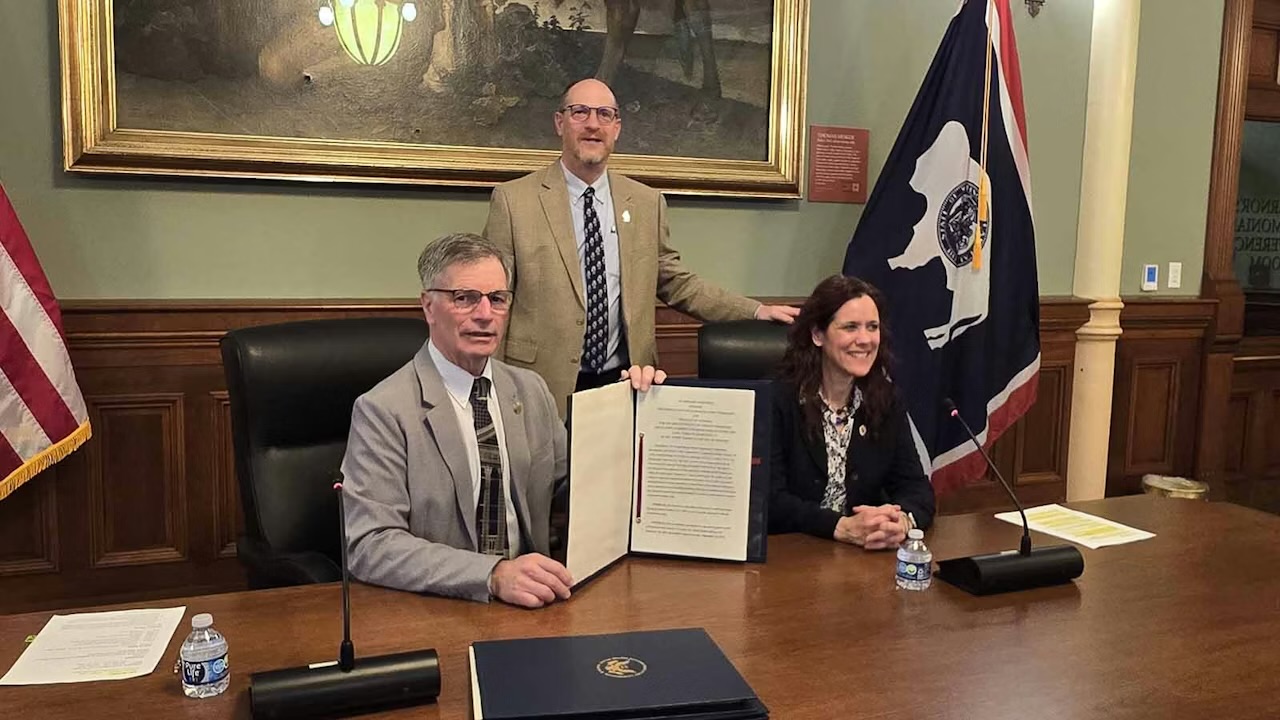
Wyoming signed a deal with the Nuclear Regulatory Commission on Tuesday that allows the state to regulate uranium and radioactive byproducts from mining rare earths. It gives the state another edge during a push for nuclear plants and domestic rare earths.
The NRC has agreed to let Wyoming take over regulation of the radioactive byproducts created when rare earths are mined. Director of NRC’s Office of Nuclear Material Safety and Safeguards Andrea Kock was in Wyoming on Tuesday to sign the deal. “That’s how important we believe these federal and private partnerships really are,” she said. “Our national materials program safety framework is local in delivery and national in standards. It’s a program where the state and federal government work side by side to protect communities.”
Gov. Mark Gordon said this is what local control should look like. “It brings accountability and transparency,” he said. “Wyoming has already demonstrated we can regulate complex industries safely and responsibly since taking on uranium authority in 2018.” Critical minerals are not just important to Wyoming, Gordon said. They are essential to national and economic security, as well as a variety of technology sectors.
Wyoming was already allowed to permit mining of both thorium and uranium in situ, but couldn’t regulate the same materials as byproducts. Extending Wyoming’s 2018 agreement with NRC to include these byproducts represents meaningful change for the industry, Wyoming Mining Association Executive Director Travis Deti told Cowboy State Daily. “This gives us regulatory primacy over our rare earth recovery,” he said. “The way it was before … we were regulated both at the state and federal level, so it was basically a double dip.” The shift will also roughly halve the $3 million permitting cost and substantially drop the time involved in getting the permit.
Among the first companies to feel the effects will be Rare Element Resources, which is developing the Bear Lodge rare earth project and a demonstration-scale processing plant in Upton. The plant will operate for up to 12 months to prove out a new and cheaper approach to processing high-purity neodymium-praseodymium oxide. Rare Element Resources Vice President Kelli Kast said the company is pleased to see Wyoming taking the lead. “Wyoming has decades of experience regulating uranium and other mineral resources through the DEQ, so it makes perfect sense to bring oversight of naturally occurring materials in rare earth projects under the same program,” she said. “This keeps regulation local, efficient, and close to the communities where these projects operate.”
The rare earth stakes are incredibly high for the nation. China still controls roughly 90% of the global supply. Rare earths are essential for everything from smartphones to smart missiles. Faster permitting matters because a cheaper approach is vital to the success of America’s rare earth industry; otherwise, firms won’t be able to compete with China’s ultra-low prices. Wyoming has already become a vital part of changing the situation with its innovative plant in Upton and the potentially massive domestic source of both heavy and light rare earths near Wheatland. Gaining state primacy over radioactive byproducts locks in the state’s already considerable advantages in the sector. Rare Element Resources had already obtained its NRC license. “With today’s signing, that license will move to the DEQ Land Quality Division’s new Source Material Program,” Kast said. “This allows us to continue operations seamlessly under state oversight, while maintaining the highest standards for safety and environmental protection.”



The latest news in your social feeds
Subscribe to our social media platforms to stay tuned