

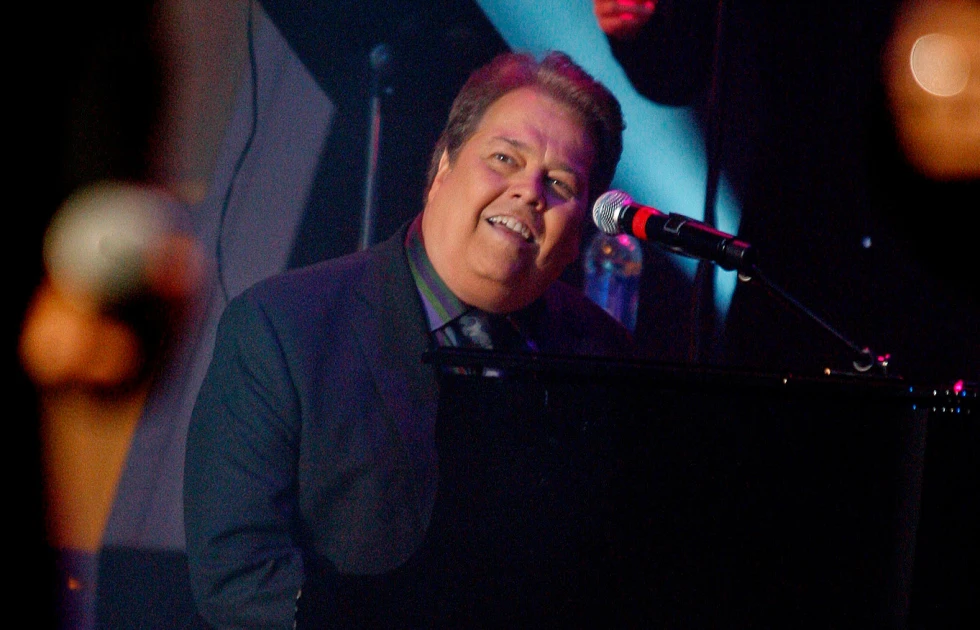



Alan Osmond, the steady architect behind one of America’s most recognizable family acts, has died at 76, closing a chapter that stretched from postwar variety shows to modern pop nostalgia.
He died Monday at his home in Lehi, Utah, surrounded by his wife Suzanne and their eight sons, according to a family spokesperson. His final years were shaped by a long battle with multiple sclerosis, a condition that forced him off the stage decades ago but never fully out of the public eye.
Osmond’s role in The Osmonds was both visible and structural. As the eldest brother, he helped shape the group’s early identity — first as a barbershop quartet with Wayne, Merrill and Jay in the 1950s, then as a polished television act that fit neatly into America’s mid-century entertainment landscape. A chance exposure at Disneyland led to a television debut in 1962, and from there the group moved into national prominence on “The Andy Williams Show.”
By the early 1970s, The Osmonds had become a commercial force. With younger brother Donny emerging as the breakout star, the group’s reach expanded rapidly. In 1971 alone, they achieved nine gold records, a benchmark that briefly placed them ahead of even Elvis Presley and The Beatles in single-year output.
But Alan’s influence extended beyond performance. He was a key songwriter behind some of the group’s defining tracks, including “One Bad Apple,” “Crazy Horses” and “Are You Up There?” Later, he shifted into production, helping shape “The Donny and Marie Show” on ABC — a move that reflected a broader transition from stage presence to behind-the-scenes control.
That pivot became permanent after his diagnosis with multiple sclerosis in 1987. The disease ended his touring career, but it also reframed how he was seen — less as a frontman, more as a figure of resilience within a family brand built on optimism and cohesion.
His own words from earlier in his career hint at the ethos he carried into that later period.
“Country music really is the backbone of America,” he said in the 1980s, explaining a stylistic shift when the group returned as a country act. “It doesn’t just come and go. And we’re kind of flag-wavers. You find that in the country area, too.”
For those closest to him, the defining narrative was less about genre or chart success and more about endurance. His son Doug described a mindset shaped by illness but not defined by it:
“He is my hero,” he said. “I’ve never met anyone more positive in my life. I never once heard him complain, not once. He would say, ‘I may have MS, but MS does not have me.’”
Even as his public role diminished, his reputation within the industry remained intact. Doug recalled moments when established artists — from Steven Tyler to Justin Timberlake — acknowledged his father’s influence, suggesting that Osmond’s contribution was understood as much within the profession as by audiences.
His death comes just a year after the passing of his brother Wayne, another reminder that the generation that built The Osmonds’ legacy is gradually receding. What remains is a body of work tied to a specific moment in American culture — one where family identity, musical discipline and television visibility combined into a singular, highly recognizable brand.


The latest news in your social feeds
Subscribe to our social media platforms to stay tuned