

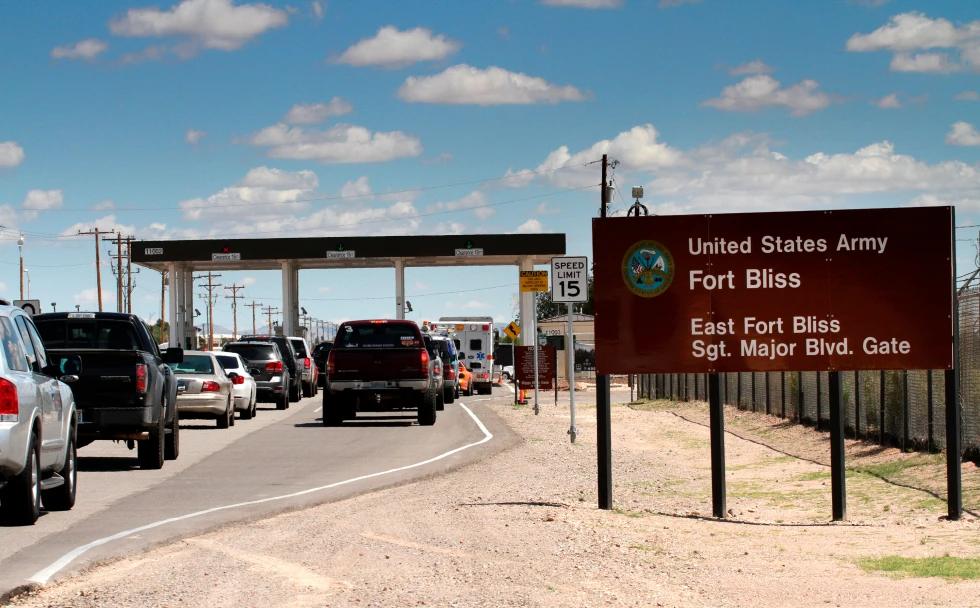



The detention of a U.S. Army sergeant’s wife in Texas is becoming an early signal of how immigration enforcement is shifting under the Trump administration — particularly for families once shielded by military ties.
Deisy Rivera Ortega, the wife of active duty soldier Jose Serrano, was taken into custody on April 14 during what was supposed to be a routine immigration appointment. According to Serrano, the arrest happened without warning.
“A person opened the door, escorted us through the hallway, and at the end of the hallway, my wife got arrested,” he said. “Arrested without any order, any warrant … They took away my wife. They don’t tell me anything.”
The case is unfolding at the intersection of two long-standing principles: strict enforcement of immigration law and special consideration for military families. For years, policies such as “parole in place” allowed spouses of service members to pursue legal status with a degree of protection from deportation. That balance now appears to be shifting.
Rivera Ortega, a native of El Salvador, is currently being held at the El Paso Service Processing Center. Her legal team has moved quickly, challenging her detention in federal court and seeking to block her deportation — particularly to Mexico, a country where she has no ties and where visits by active duty U.S. personnel are restricted.
Her attorney, Matthew James Kozik, argues that her situation is not straightforward. He says she held a valid work permit and had previously been granted withholding of removal to El Salvador, suggesting that her legal standing was more complex than a simple case of unlawful presence.
The Department of Homeland Security presents a different picture. In its response, the agency emphasized that Rivera Ortega entered the U.S. illegally in 2016 and has been under a final order of removal since December 2019. “Work authorization does not confer any legal status to be in the country. Rivera-Ortega remains in ICE custody pending removal,” DHS said.
What makes the case notable is not just the legal dispute, but the policy context around it. In April, the administration rolled back a 2022 guideline that treated a family member’s military service as a “significant mitigating factor” in enforcement decisions. The updated policy is more direct: “military service alone does not exempt aliens from the consequences of violating U.S. immigration laws.”
That change reframes how cases like Rivera Ortega’s are evaluated. Where military affiliation once offered a layer of discretion, it now carries less weight in determining whether enforcement proceeds.
For Serrano, the policy shift is playing out in immediate, personal terms. After her arrest, he was only able to see his wife through a partition during a visit at the detention center.
The broader implications are still taking shape. Advocates for military families have long argued that stability at home is essential for service members deployed abroad, while enforcement officials maintain that immigration law must be applied consistently.



The latest news in your social feeds
Subscribe to our social media platforms to stay tuned