

Dollar lifelines on the table as allies seek relief from Iran war shock


The economic fallout from the US-Israel war on Iran is now showing up in a familiar place: demand for dollars.
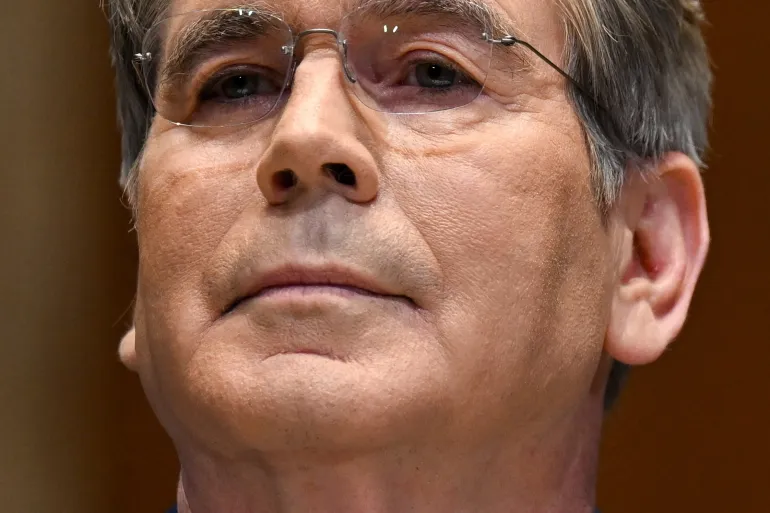
US Treasury Secretary Scott Bessent told lawmakers that several allies in the Gulf and Asia have approached Washington for currency swap lines — a mechanism that allows central banks to access dollars in times of stress and keep financial systems from seizing up. The requests reflect how quickly energy disruption is spilling into broader market instability.
“And swap lines, whether it’s from the Federal Reserve or the Treasury, are to maintain order in the dollar funding markets and to prevent the sale of the US assets in a disorderly way,” Bessent said. “So, the swap line would benefit both the UAE and the US, and, as I said, numerous other countries, including some of our Asian allies, have also requested them.”
The immediate focus is on the United Arab Emirates, which President Donald Trump said he is considering for such a facility. But the broader signal is that liquidity pressure is building across regions exposed to the shock in energy markets.
Swap lines are not new. They are one of the standard tools used during periods of financial stress, designed to keep access to dollars flowing and avoid forced asset sales that can deepen volatility. The United States deployed them widely during the COVID-19 crisis, extending support to countries including Brazil, Mexico, South Korea and Singapore.
There is also a recent political precedent. Last October, the Treasury extended a $20bn swap line to Argentina during a turbulent election period, helping stabilise the peso and, indirectly, the broader financial environment. That arrangement was later repaid.
But the current context is more complicated.
The war with Iran has pushed oil prices higher and injected uncertainty into global markets, creating conditions where access to dollar liquidity becomes both more valuable and more politically sensitive. That tension surfaced quickly during the Senate hearing.
Senator Chris Van Hollen questioned whether extending such support could come at a cost domestically.
“In addition to lives lost, we’re talking about over a billion dollars a day in taxpayer money, we’re talking about higher gas prices, higher prices overall, and now we understand that the UAE is asking you to provide them a swap line through the Exchange Stabilization Fund,” he said.
The criticism is not only about economics. It is also about optics and political ties. Van Hollen pointed to the Trump family’s business relationships with the UAE, suggesting that those connections could be influencing policy decisions.
Bessent rejected that argument, denying any “linkage” between financial arrangements and political or business relationships.
Outside government, the interpretation is more pragmatic. Analysts suggest that for countries like the UAE, the appeal of a swap line goes beyond immediate liquidity.
“It is more likely that the ask is symbolic and one of the many ways that the UAE government has been trying to signal their commitment to the US, at least in national security sensitive areas like AI development, defense and more,” Rachel Ziemba said.
“Moreover, the UAE would like to be at the nexus of global financial hubs, making a swap line that is a US seal of approval particularly attractive.”
That framing highlights a dual function. Swap lines are both technical tools and political signals — a way to stabilise markets while reinforcing financial alignment with the United States.

The latest news in your social feeds
Subscribe to our social media platforms to stay tuned