



Donald Trump has again moved to challenge an election result, this time in Virginia, where voters narrowly approved a referendum to redraw the state’s congressional map — a decision that could shift the balance in the US House.
With most ballots counted, the measure passed 51.45 percent to 48.55 percent, a tight margin but enough to trigger what is likely to become another legal and political battle over how electoral maps are drawn.
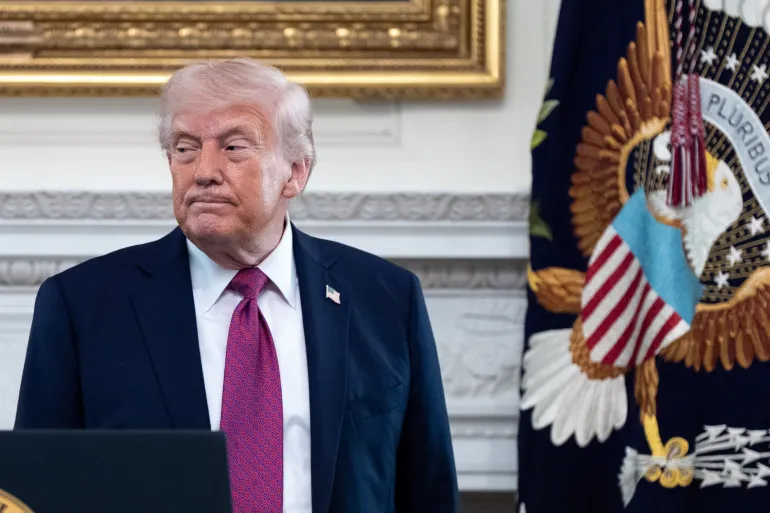
Trump responded quickly on Wednesday, framing the outcome as illegitimate without presenting evidence.
“A RIGGED ELECTION TOOK PLACE LAST NIGHT IN THE GREAT COMMONWEALTH OF VIRGINIA!” he wrote in a post on TruthSocial.
“All day long Republicans were winning, the Spirit was unbelievable, until the very end when, of course, there was a massive ‘Mail In Ballot Drop!’ Where have I heard that before – And the Democrats eked out another Crooked Victory! Six to five goes to ten to one, and yet the Presidential Election in November was very close to a 50-50 split,” he continued.
The language is familiar. Trump has repeatedly questioned election outcomes since 2020, despite courts and election officials consistently upholding those results.
But the Virginia case sits within a broader, more structural conflict. Redistricting — typically a once-a-decade process tied to the census — has turned into an active political battleground ahead of the midterms, with both parties trying to redraw maps to their advantage.
For Democrats, the Virginia vote is part of a defensive strategy, responding to Republican-led redistricting efforts in states like Texas and Missouri. For Republicans, it raises concerns about how and when such changes are being pushed through.
The immediate impact could be significant. Adjusting district boundaries can reshape electoral outcomes without a single vote changing, making redistricting one of the most powerful — and contested — tools in US politics.
The legal fight is already forming. Opponents of the referendum argue that the process behind it was flawed, pointing to questions about how the measure was introduced and whether the ballot language was clear enough for voters.
The state’s Supreme Court had allowed the vote to go ahead but signalled it could revisit those concerns after the fact, leaving the result in a kind of provisional state.
Trump has leaned into that uncertainty, criticising the wording itself and urging judicial intervention.

The latest news in your social feeds
Subscribe to our social media platforms to stay tuned