
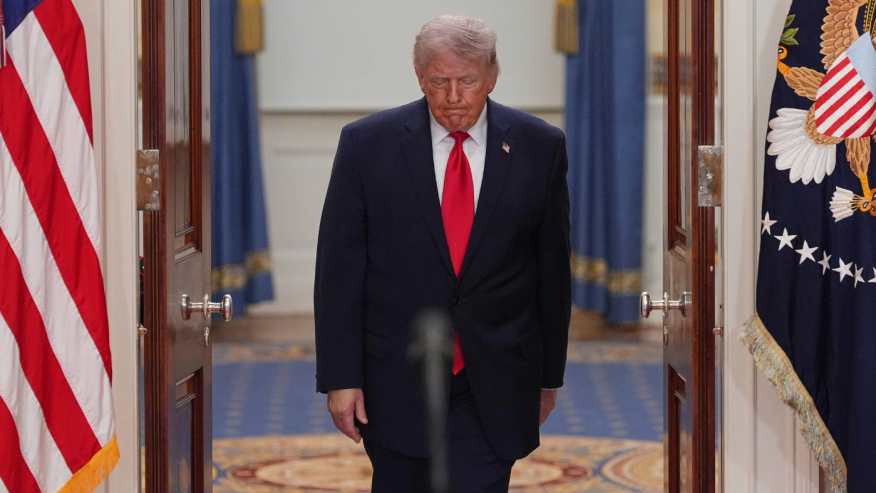




The first Tomahawk missiles hit Iranian air-defense batteries at 2:47 a.m. local time on February 28, 2026. Operation Epic Fury was supposed to last seventy-two hours. Ali Khamenei was killed in the opening salvo. Natanz and Isfahan were cratered. Iran launched ballistic missiles at US bases in Qatar, Bahrain, and the UAE, struck an American diplomatic compound in Dubai, and slammed the Strait of Hormuz shut. Three months later, the bombs have largely stopped falling, but the strait remains blocked, and the ceasefire is a tattered fiction.
The numbers, even conservatively tallied, are staggering. Over 10,000 people have been killed across Iran, Israel, Lebanon, and the Gulf states. Iran alone has suffered over 3,500 dead, including roughly 1,600 civilians, with another 3.2 million displaced. The US military has confirmed 15 soldiers killed and 538 wounded, though the actual toll of “wounded” is contested – The Intercept revealed the Pentagon quietly erased many non-visible injuries from the public tally. Israel has lost 22 soldiers and sustained more than 8,600 wounded. Lebanon, the front everyone tried to ignore, has counted nearly 3,000 dead, with Israel intensifies attacks.
A ceasefire brokered by Pakistan on April 7 paused the overt bombing campaign. But US naval forces remain on blockade duty in the Gulf, enforcing what Washington calls “freedom of navigation” and what Tehran describes as a strangulation of its economy. The US has continued to launch strikes against Iranian coastal batteries and, according to Iranian officials, has repeatedly violated the ceasefire’s maritime provisions. Talks in Islamabad have limped along – Secretary of State Marco Rubio recently reported “slight progress” – but Iran’s new Supreme Leader, Ayatollah Mojtaba Khamenei, has hardened the clerical position: near-weapons-grade uranium must stay in Iran. Washington’s demand for full dismantlement of the nuclear program remains a non-starter. The barely alive diplomatic track recently suffered another blow after the US conducted “self-defense” strikes on Iranian military in the Strait.
So how has the war been felt at home?
Dean Baker, Co-founder and Distinguished Senior Fellow at the Center for Economic and Policy Research (CEPR), frames the economic stakes with brutal clarity:
Everything really depends on how long the closure of the Strait lasts. If it reopens soon, then gas prices will likely edge back down, but they will not get back to pre-war levels this year. We will still see effect ripping through the economy as higher transportation costs get passed on in food and other items. Also, the surge in airfares will at best come down by the holiday season. The higher prices will pull money out of people’s pockets and slow growth, but is not likely to lead to a recession or major rise in unemployment.
That’s the optimistic scenario. The darker one is already coming into view.
If the Strait is not opened for another month or two, we will see considerably higher oil and gas prices. Right now, we are consuming out of storage, that is not going to be possible for too much longer. This will likely mean that oil prices go to around $150 a barrel and gas prices get to $6.00 a gallon as a national average. This will be a big hit to growth, possibly causing a recession and will certainly lead to a noticeable rise in unemployment. It will not be a good story.
More of Dr. Baker’s analysis can be found on his Substack.
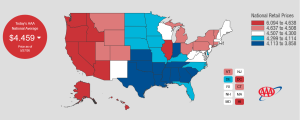
Americans are already living the early chapters of that story. National average gasoline prices have jumped $1.50 per gallon since the conflict began. Diesel has risen even more steeply, a direct blow to the trucking, farming, and construction sectors that move the physical economy.
Here in Wyoming, a state whose economy runs on energy extraction, tourism, and agriculture, the price at the pump has climbed past $4.20 a gallon – painful for the 10th largest state. The AAA gas price tracker shows the state’s average up more than $1.30 since late February.
American Action Forum President Douglas Holtz-Eakin emphasized the long-lasting impact of the conflict:
The direct impact of the Iran hostilities is higher global oil prices. This is effectively a tax on American households in the form of higher gasoline and other energy prices. As the duration of the price spike increases, the price pressures will spill over to other goods and services, leading to higher inflation over the next year. On the other side of the ledger, US oil producers, drillers, equipment manufacturers, and the entire supply chain for exploration and development will benefit. The upshot is an economic outlook with sluggish growth and sustained elevated inflation that could persist for 6 to 9 months.
Claudia Sahm, Chief Economist at New Century Advisors, explains the war’s cost for regular Americans:
How quickly pain sets in for American families depends on how long the supply disruptions in the Middle East last and how rapidly buffers at home are worn down. Each additional day of disruption in the Strait of Hormuz worsens the shortfall in global energy supply. In the United States, that shows up as higher prices. Gasoline prices are up nationally by $1.50 per gallon since the conflict started, and diesel prices have risen even more. Initially, many people have some buffer to handle the extra expense. For example, average tax refunds were about $350 higher than last year, typical wages had been rising faster than inflation before the conflict, and rising stock prices have boosted some people’s savings. But there are limits to how far these buffers can stretch, and some families are already past that point. When the buffers are gone, families will have to cut back on spending, and that could weigh on growth and employment. The only way to avoid ever-increasing pain for families this year is to resolve the conflict.
More of Dr. Sahm’s analysis can be found on her Substack: Stay-At-Home-Macro (SAHM)
The buffers are wearing thin. Consumer confidence, as measured by the University of Michigan and the Conference Board, has plunged to levels not seen since the early pandemic months. A poll released by Al Jazeera found that 61% of Americans now believe attacking Iran was a mistake. The number of voters who say the economy is “excellent” or “good” has collapsed. At grocery stores, prices for staples – bread, eggs, dairy – have risen between 4% and 8% since March, driven not only by fuel costs but also by fertilizer prices that are tightly linked to natural gas. Farmers, already squeezed by trade wars earlier in the Trump administration, are facing a brutal planting season with diesel at near-record highs and export routes disrupted by the maritime chaos.
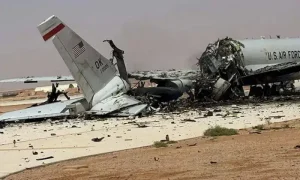
The fiscal cost of the war itself has become a political lightning rod. The Pentagon acknowledged in late April that the operation had cost $25 billion – a number that defense analysts at CSIS immediately called a dramatic undercount. A more comprehensive estimate from the Costs of War Project at Brown University’s Watson Institute put the tally closer $200 billion when factoring in munitions replacement, long-term veterans’ care, and interest on debt-financed war spending. Forbes reported that the true figure could exceed $1 trillion over a decade once all downstream costs are included. The Congressional Budget Office has not yet released a full accounting, but independent analysts project that the US had burned through more than 850 Tomahawk missiles as early as March – a stockpile that will take years to replenish at current production rates – and lost over 40 aircraft, including several F-35s, to Iranian air defenses.
The economic ripple effects go far beyond the battlefield. Air travel costs have spiked as routes that once overflew the Middle East are now forced thousands of miles out of their way. Shipping containers that would have transited Hormuz are now rerouted around Africa, adding weeks and thousands of dollars to delivery times. Manufacturers reliant on just-in-time supply chains – from automakers in Michigan to electronics assemblers in Texas – are facing parts shortages and soaring logistics bills. The result is an economy that was growing at a modest but steady clip in Q1 2026 is now flirting with stall speed.
Kyle Kondik, Managing Editor of Sabato’s Crystal Ball at the University of Virginia Center for Politics, has been tracking the electoral fallout:
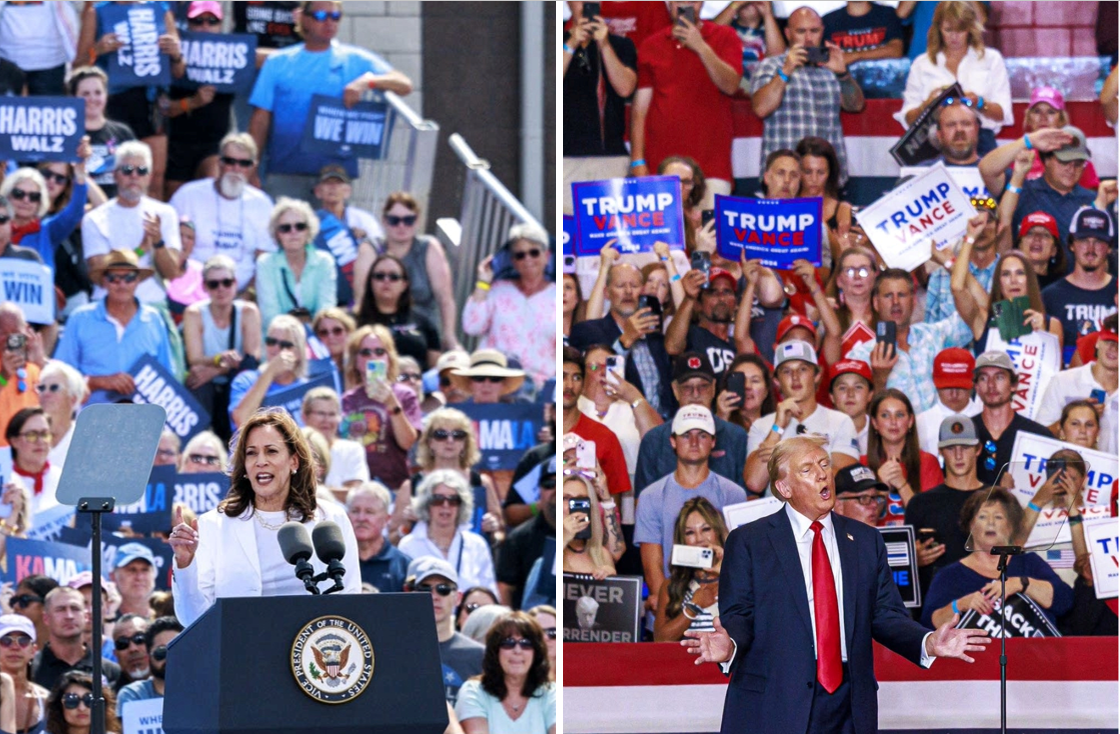
From a political perspective, the war’s impact on costs at home is more important than the war itself. Voters were already upset about high prices and pessimistic about the economy, and the war’s impacts have exacerbated that anger. I don’t think it’s a coincidence that Trump’s approval rating continues to slide, as he’s lost about 7 points of net approval since the strikes on Iran at the end of February. House generic ballot polling has also modestly improved for Democrats over that time. The endgame remains unclear. It was true back in February and it’s still true now: Republicans need their political position to improve. It instead appears to either be stagnating or getting worse.
The numbers bear out Kondik’s assessment. A Reuters/Ipsos poll found that a majority of Americans believe the administration has not clearly explained the war’s objectives. A Pew Research survey from early May showed that only 32% of Americans approve of Trump’s handling of the conflict. Among independents – the voters who decide midterm elections – the figure was lower still. The generic congressional ballot, which asks voters which party they’d prefer to control Congress, has swung from a Republican advantage of roughly 3 points in January to a Democratic lead of nearly 5 points in some recent surveys.

Even with the electoral gift from the Trump administration the Democratic Party has been curiously paralyzed. Congressional Democrats were initially muted in their criticism, wary of appearing unpatriotic during a conflict launched by a Republican president. But as the war has dragged on and public opinion has soured, that posture has become untenable. A resolution to invoke the War Powers Act and force a withdrawal of US forces from hostilities finally cleared the Senate on May 20, with three Republicans joining all Democrats. The House, however, has delayed its vote until June, as GOP leaders scramble to prevent a defection that would publicly rebuke the president.
On the Republican side, the primary defeat of Representative Thomas Massie of Kentucky – a libertarian who had become the most visible GOP critic of the war – sent a chilling message. Massie, who stood up to Trump over presidential war powers and the economic cost of the blockade, was crushed in his primary after pro-Israel groups poured record-breaking $32.6 million into the race. His loss, widely interpreted as a warning to other Republican dissenters, has further narrowed the space for internal debate about the war’s trajectory. The party is now locked behind a president whose approval rating on foreign policy has fallen into the low 30s, and whose signature military initiative is increasingly seen by the electorate as a mistake.
Evelyn Farkas, the executive director of the McCain Institute at Arizona State University, the author of ‘Fractured States and Foreign Policy: Iraq, Ethiopia and Bosnia in the 1990s’, sees the international damage as severe and lasting:
The Iran War has had a negative impact on our allies – hurting them economically. It has also tested the relationships with our allies, who have been asked to contribute militarily to a war the United States initiated without warning them or consulting with them. For the Europeans in particular, this is in sharp contrast to past efforts to deal with Iran’s nuclear program – where the EU and Europeans have been at the table and part of the negotiated deal. The Asian allies have been hit hard by the oil prices and shortages. This has been especially devastating for the Philippines, where people have been encouraged to stay home and reportedly planes can only fly into the country if they have sufficient fuel to leave.
Some allies are angry that the United States and Israel started the war during negotiations and that the war resulted in a new problem: the blocked Strait of Hormuz. They are frustrated that the current round of talks doesn’t seem to be driving quickly towards successful resolution – opening the Strait of Hormuz and containing Iran’s nuclear weapons program. Finally, US decisions to withdraw military forces in Europe have appeared vindictive and petty. A of this has led to criticism by European leaders that is public and loud, because for European politicians it is good politics to criticize America, given the high disapproval ratings of the United States the among the European people.
More of Dr. Farkas’ analysis can be found in this CNN interview.
The transatlantic relationship, already strained by Trump’s earlier trade and defense demands, is now in a state of open crisis. Spain refused the use of its airbases for combat missions. Italy blocked US bombers from staging out of Sigonella. France closed its airspace to military resupply flights. Trump retaliated by announcing the withdrawal of 5,000 troops from Germany – a move that even some Republicans labeled petty – and by threatening tariffs on European goods.
The Middle East, the theater of war itself, has been fundamentally reshaped. Saudi Arabia, which quietly refused US access to its airspace for “Project Freedom” – the naval escort mission through Hormuz – has kept its backchannel to Tehran open and joined a quadrilateral mediation effort alongside Egypt, Turkey, and Pakistan. The UAE quit OPEC on April 28 in a move widely read as a declaration of independence from Saudi-led oil diplomacy, and secretly launched retaliatory strikes against Iranian targets before the ceasefire. Qatar, host to the largest US military base in the region, has seen its LNG export infrastructure crippled – damage that will take years and tens of billions of dollars to repair, and which has gutted the state’s primary revenue source. Across the Gulf, the American security guarantee that had underpinned the regional order for decades is now openly questioned. Leaders who once measured their safety by the number of US bases on their soil are calculating that those bases make them targets, not safe havens.
In Asia, the economic shock has been acute. Japan and South Korea, both heavily dependent on Gulf oil and LNG, have seen energy costs soar and industrial output falter. The Philippines has faced aviation fuel shortages so severe that planes are reportedly only permitted to land if they carry enough fuel to depart again. China has watched the American entanglement with a mixture of strategic satisfaction and economic concern; the war has disrupted Chinese energy imports and supply chains, but it has also accelerated Beijing’s long-term goal of weakening US primacy in the western Pacific and the Middle East.
Back in the United States, the war has become an inescapable presence in daily life – at the gas station, in the grocery aisle, in the higher ticket prices for summer vacations that many families are now canceling. The economic optimism that characterized the first year of Trump’s second term has evaporated. Small-business owners surveyed by the National Federation of Independent Business now cite energy costs and inflation as their top concerns, displacing the regulatory and tax worries that had dominated Republican messaging for years.
The war’s fiscal burden is also crowding out other priorities. The administration has quietly shelved a promised infrastructure package, citing the need to fund the conflict and the associated naval deployments. The federal deficit, already projected to exceed $2 trillion in 2026 before the war began, is now on track to surpass $3 trillion, with defense outlays accounting for the largest single increase. Interest payments on the national debt, which crossed $1 trillion annually for the first time in 2025, are rising even faster as Treasury yields climb on war-driven inflation fears.
The domestic political clock is ticking faster than the diplomatic one. Every week the strait stays shut, the odds of a recession increase. Every month gas prices remain elevated, the electoral map tightens further against Republicans. The war that was supposed to once again demonstrate American resolve has instead exposed American overreach, and the bill is landing on a country that was never asked whether it wanted to pay it.


The latest news in your social feeds
Subscribe to our social media platforms to stay tuned