

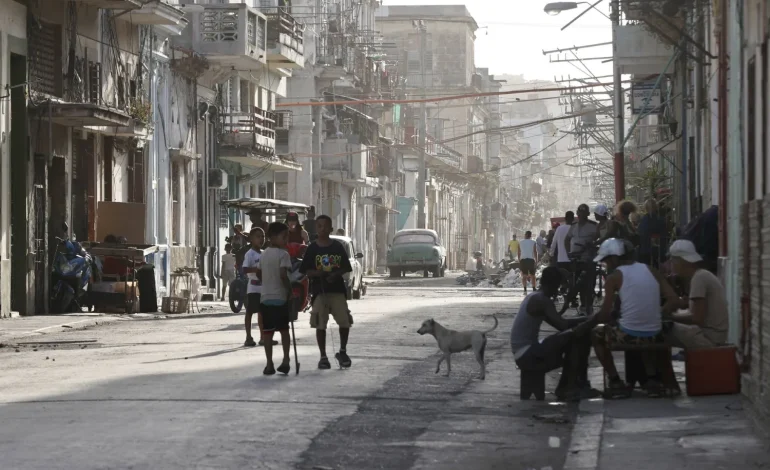


The Florida Straits have never felt this crowded since 1962. Not with Soviet submarines, but with sanctions, executive orders, and tankers that may or may not dock. Washington and Havana are locked in their sharpest confrontation in decades, and the trigger this time is oil. The White House calls it national security. Havana calls it economic warfare. Ordinary Cubans call it another blackout.
The crisis accelerated in January 2026 when President Donald Trump signed an executive order titled “Addressing Threats to the United States by the Government of Cuba,” expanding restrictions on fuel shipments and threatening penalties on foreign companies that supply oil to the island. The accompanying fact sheet framed Cuba as a destabilizing actor aligned with US adversaries. The order did not emerge from nowhere. The United States has maintained some form of embargo against Cuba since the early 1960s. But this time, the focus is energy – the choke point of a modern economy.
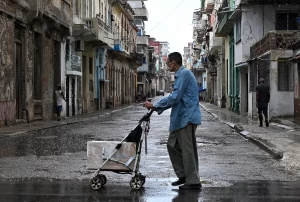
Oil powers 80 percent of Cuba’s electricity grid. It keeps hospitals running, water pumped, buses moving, crops transported. Remove oil, and the system begins to fail everywhere at once. On January 29, Trump designated Cuba an “unusual and extraordinary threat“ to US national security, reinstating the island on the State Sponsors of Terrorism list just one day after the Biden administration had removed it. The designation opened the door to aggressive secondary sanctions and threats against any country or company exporting fuel to the island.
The result was swift. Venezuela, Cuba’s primary supplier, halted shipments after facing direct US pressure following the capture of Nicolás Maduro. Mexico followed. Insurers began refusing coverage for tankers bound for Cuban ports. The United Nations warned of humanitarian collapse.
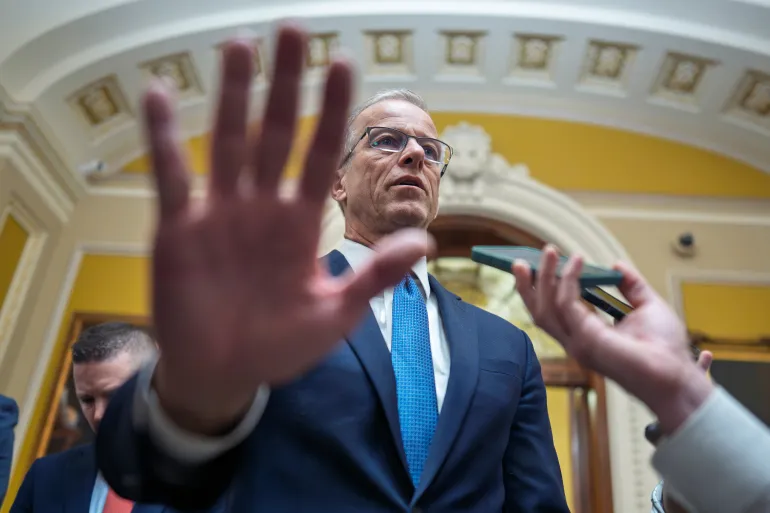
The policy push has been closely associated with Secretary of State Marco Rubio, who has openly argued that political change in Havana would benefit Washington. Speaking during a Senate Foreign Relations Committee hearing earlier this year, Rubio said:
“I think we would like to see the regime there change. It would be a great benefit to the United States if Cuba was no longer governed by an autocratic regime.”
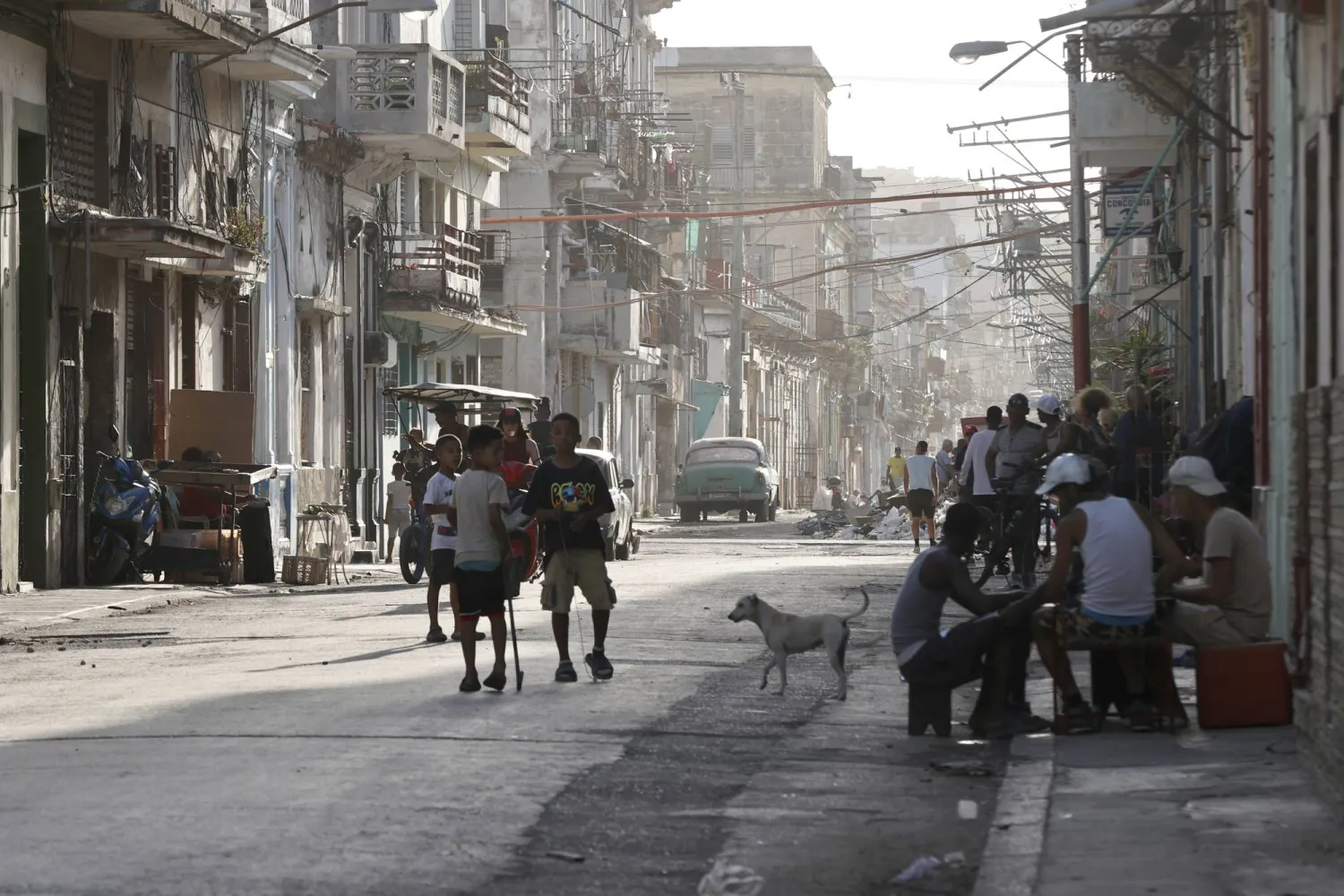
The consequences of that pressure campaign have been increasingly visible on the ground. The energy shortage has spilled into every part of daily life. In cities where cooking gas has not been delivered for months, residents are burning firewood even in densely populated neighborhoods. Bread factories in Guantánamo have switched to wood fuel, while garbage is burned in streets and on nearby hills, filling residential areas with smoke. Telecommunications networks and healthcare are similarly strained. Power cuts lasting up to 18 hours a day have affected hospital emergency wards, dialysis patients, and pumping stations.
Senior US officials have indicated that the end goal of these policies is to bring about political and economic liberalization in Cuba, including the potential removal of President Miguel Díaz-Canel from power.
“Cuba has an economy that doesn’t work and a political and governmental system that can’t fix it. So they have to change dramatically,” said US Secretary of State Marco Rubio on March 17.
Despite the increasingly aggressive rhetoric and growing economic pressure, experts said that the Trump administration’s goals remain unclear and doubt that a Venezuela-style military takeover of Cuba is likely – particularly as the United States remains engaged in a widening conflict with Iran.
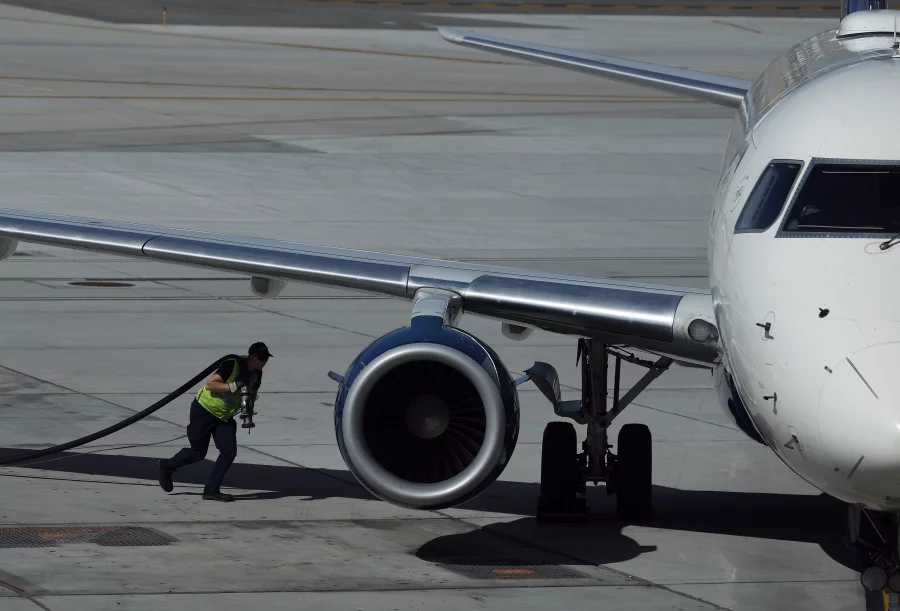
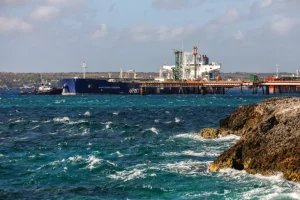
For three months, Cuba received no oil shipments. Then, on March 30, a Russian-flagged tanker named the Anatoly Kolodkin broke the blockade. It carried 100,000 tonnes of crude – about 730,000 barrels – enough to meet Cuba’s daily needs for roughly 10 days if refined into diesel. Trump allowed it through.
“If a country wants to send some oil into Cuba right now, I have no problem with that, whether it’s Russia or not,” he told reporters aboard Air Force One. “Cuba is finished. They have a bad regime. They have very bad and corrupt leadership, and whether or not they get a boat of oil, it’s not going to matter.”
The White House insisted this was “not a policy change.” Press secretary Karoline Leavitt said decisions were being made on a “case-by-case basis” to provide humanitarian needs to the Cuban people. But the Kremlin saw it differently. Dmitry Peskov, spokesman for Russian President Vladimir Putin, said Russia considered it “its duty to step up and provide necessary assistance to our Cuban friends.” He added that the shipment had been “raised well in advance … with our American counterparts.” A second Russian tanker was soon announced, with Energy Minister Sergei Tsivilev declaring:
“We will not leave Cubans alone in trouble.”
Michael Galant, Senior Research and Outreach Associate at CEPR, put it this way:
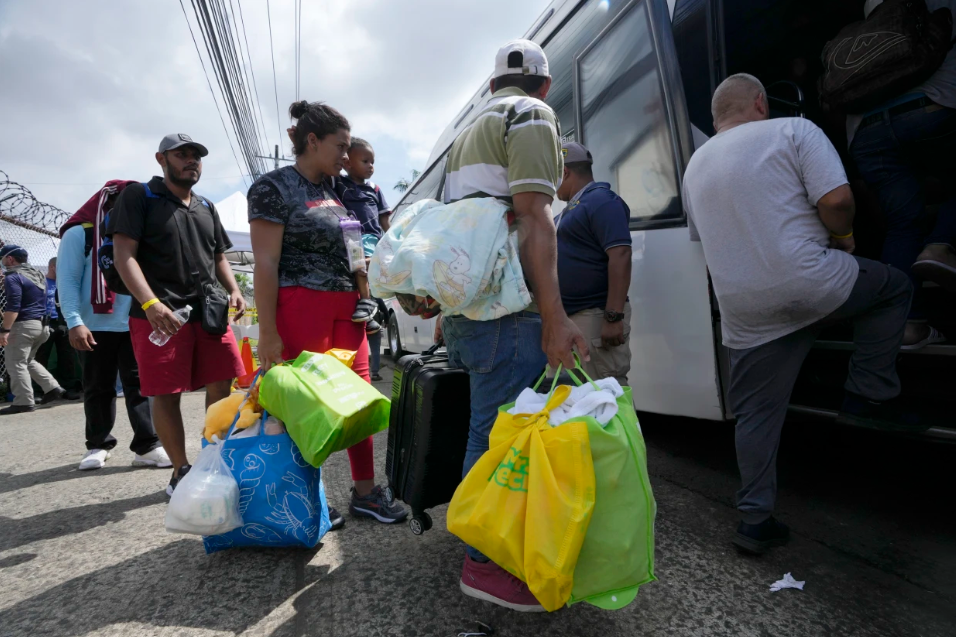
“I suspect that the Trump administration allowed the arrival of the Russian tanker because it understands that humanitarian crises lead to migration crises – and it wasn’t willing to face a surge in migration from Cuba while also dealing with the fallout of a war-of-choice on Iran. But this does not mean that Cuba is out of the woods.
The arrival of the Anatoly Kolodkin provided a small measure of relief to the fuel-starved island, yet hardly enough to change the underlying conditions. The humanitarian situation remains dire, and may even worsen as energy demands increase in the summer months – also the time of year when migration tends to increase. That Mexico still hasn’t resumed its oil shipments is a strong indicator that Trump is keeping the pressure on behind the scenes. Even if Trump is allowing a trickle of oil in for now, he’s still keeping his hand on the spigot. In the meantime, the Cuban people continue to suffer.”
Canada and Mexico stepped in with humanitarian aid, but not fuel. Canada announced an accelerated funding of $8 million to scale up food and nutrition for vulnerable Cubans, delivered through the World Food Programme and UNICEF. Mexican navy ships docked in Cuba bringing approximately 800 tons of goods and 1,500 tons of powdered milk and beans. But Mexico, which had become Cuba’s largest alternative supplier after Venezuelan deliveries declined, halted oil shipments under US pressure. The “Nuestra América” convoy, an international flotilla of activists, delivered food, medicine, solar panels, and bicycles – but as one activist admitted:
“These ships are a drop in an ocean of need. At the same time, it’s a gesture of solidarity.”
Ricardo Torres, a Cuban-born economist, Research Fellow at American University in Washington DC, and editor of the newsletter Cuba Economic Review, offered a sober assessment:
“This shipment will not fundamentally change Cuba’s power generation deficit. Based on the latest official figures, and assuming normal consumption levels, the cargo would cover roughly two weeks of demand. The deeper problem is that, even if restrictions on oil supply were eased, Cuba still lacks the financial capacity to import all the fuel it needs on a sustained basis. In that sense, lifting the embargo could provide some temporary relief, but it would not resolve the structural causes of the crisis.
I think it is still too early to declare the end of the oil embargo. In fact, the Russians were careful to clarify that this was a humanitarian shipment, meaning it was not strictly a commercial transaction. On the US side, this also reflects an acknowledgment of the reality on the ground. Given the geographic proximity, Washington does not want a total collapse in Cuba either. That is why these actions suggest a fair degree of pragmatism. At the same time, it is also true that the war in Iran has created a new reality. It is now a priority for the White House, which has even had to ease some sanctions on Russia to allow oil to keep flowing.
I think any other country with the material capacity to send fuel, especially Mexico, will be watching the White House’s signals closely. No government wants to put its economic security at risk at a time of such heightened uncertainty.”
Behind the scenes, high-level talks between Washington and Havana have been ongoing. Cuban President Miguel Díaz-Canel revealed that former president Raúl Castro, the 94-year-old revolutionary leader still considered the most powerful person in the nation, is involved in the discussions. Cuba has also signaled openness to negotiation on some fronts. It announced it would allow Cuban emigrants to invest in businesses on the island – a significant policy shift. And Cuba is prepared to discuss offering “lump sum” compensation to Americans and American firms that saw property nationalized after the 1959 revolution.
But on the core issue, Havana refuses to budge.
“I can categorically confirm that the Cuban political system is not up for negotiation,” Deputy Foreign Minister Anayansi Rodriguez Camejo told Anadolu. “It’s not part of the negotiating table if we can have this negotiating table. And, of course, neither the president nor the position of any official is subject to negotiation.”
Díaz-Canel himself told NBC News:
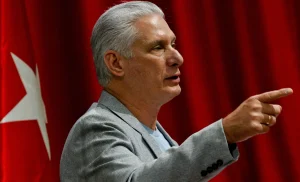
“We have a free sovereign state, a free state. We have self-determination and independence, and we are not subjected to the designs of the United States. The concept of revolutionaries giving up and stepping down – it’s not part of our vocabulary.”
While world attention has focused on the Middle East, the crisis in Cuba has deepened into a full-blown humanitarian catastrophe. The numbers tell a grim story. According to the UN, 96,000 surgeries have been postponed – including 11,000 for children. The National Immunization Programme has been delayed for thousands of infants. Some 32,000 pregnant women are not getting proper attention, with ultrasound exams disrupted. And roughly one million people are currently dependent on water trucking, a service severely constrained by the lack of diesel.
John Kirk, professor emeritus at Dalhousie University (Canada), has been in daily contact with Cuba-watchers on the island.
“The situation remains desperate,” he says. “While world attention has focused on the Middle East, Cuba is still in the midst of a humanitarian crisis. Yes, a Russian ship delivered fuel (enough for three weeks), but there is still a massive fuel shortage. The UN resident coordinator announced recently that the ongoing fuel shortage has resulted in major difficulties in trucking food into the cities. Food also remains in containers at the docks, again because of a lack of fuel.
The healthcare system has been particularly affected – 96,000 surgeries have been postponed (including 11,000 for children): 32,000 pregnant women are not getting proper attention (the difficulties in having ultrasounds are a major problem); children’s vaccination programs have been delayed. A million people face difficulties accessing water (delivered by electricity).
In sum, while the Middle East is the focus of international media attention, the crisis in Cuba remains. Donald Trump has made it clear that he will return to the Cuba file soon – and the US fuel blockade (condemned by the UN) may again be reimposed. The humanitarian crisis may have disappeared from media attention in North America, but millions of Cubans continue to face major difficulties to get food and water on the table, to receive medical treatment, to attend school – and to have access to electricity.”
The healthcare system, once a source of national pride and international solidarity, is buckling. Doctors earn roughly $16 a month and need side hustles to survive. One physician told Reuters he wakes at 5 a.m. to cook rice and beans for sale just to supplement his income. The Public Health Ministry projects the surgery waiting list could grow to 160,000 by year-end. More than 300 pediatric operations each week are short of medicine, oxygen, or anesthesia.
“Public healthcare has always been promised here. Free. A world-class system,” the doctor said. “I don’t know how much longer we can endure this. There are fewer and fewer doctors, fewer resources for the patient, but the patients keep coming.”
The WHO chief, Tedros Adhanom Ghebreyesus, described the situation as “deeply concerning.”
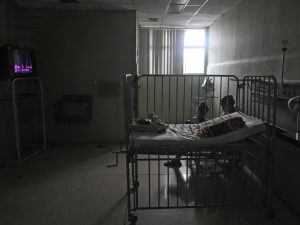
“Health should be protected at all costs and never be at the mercies of geopolitics, energy blockades, and power outages,” he said. “Cuba’s hospitals, clinics, and ambulances are needed now, more than ever, and must be supported to perform their life-saving work.”
Beyond the hospitals, the crisis has infiltrated every corner of daily life. Power outages lasting up to 20 hours are routine. Garbage piles up in Havana because trucks lack fuel. Public transport has all but vanished. Schools have shortened hours. The tourism industry, once Cuba’s main source of foreign exchange, has collapsed after airlines from Canada, Russia, China, and France suspended flights. A mental health crisis has enveloped the island, with Cubans turning to the black market for antidepressants and mood stabilizers.
“On a daily basis, someone might wake up without electricity, without the certainty of breakfast, or without knowing how they will get to work. This generates a great deal of stress, which is accompanied by numerous psychological manifestations: depression, intense anxiety, and mental fatigue,” said Cris Sánchez, Cuba resident.
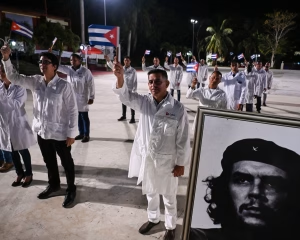
The US has also targeted Cuba’s medical missions abroad, a program that earns the island billions of dollars annually. Guatemala, Honduras, Jamaica, Guyana, the Bahamas, Antigua and Barbuda, and St. Vincent and the Grenadines have all terminated their agreements with Cuba under US pressure. Cuban Foreign Minister Bruno Rodríguez accused the US of “extorting” countries to end the decades-old deals. Mexico, however, has refused to comply. President Claudia Sheinbaum said the agreement was a benefit to Mexico:
“It’s hard to get Mexican doctors and specialists to go out to many rural areas where we need medical specialists, and the Cubans are willing to work there.”
The Iran war has bought Havana a temporary reprieve. As Politico noted:
“Regime change in Cuba has long been on President Donald Trump’s to-do list. But with Tehran dominating the agenda, Havana is getting a reprieve – for now.”
A person familiar with the administration’s conversations on Cuba told NatSec Daily that Trump and his aides decided it was worth letting Cuba’s regime have a longer lifeline for now, given the amount of resources and attention Iran is consuming.
But that reprieve is unlikely to last. Trump has repeatedly said Cuba is “next.” On March 27, he told reporters:
“I built this great military. I said, ‘You’ll never have to use it.’ But sometimes you have to use it. And Cuba is next.”
The administration still intends to change the Cuban political and economic system, a White House official confirmed.
William LeoGrande, Professor of Government at American University in Washington, sees the bigger picture:
“President Trump’s about-face on the oil blockade of Cuba was precipitated by two events. First, the Supreme Court ruling that declared the use of the International Emergency Economic Powers Act to impose tariffs unconstitutional invalidated the Executive Order imposing the oil blockade, so the administration would need to invent a new enforcement mechanism. Second, the Russian decision to send a tanker in defiance of the blockade. Trump did not want to provoke a confrontation with Russia while US forces are tied up in Iran. Another US fear is that with no oil at all, the Cuban economy might collapse, precipitating a migration crisis. Since Trump never admits he’s failed, he claimed he just didn’t care if people send oil to Cuba. No one else has so far, but Mexico has indicated they might resume shipments.
There is no doubt we will see a new round of pressure on Cuba once the conflict with Iran subsides. After all, Trump himself said, Cuba is next. But it is hard to predict whether it will be economic pressure alone or will include military strikes in order to increase Trump’s leverage at the bargaining table– a strategy he has pursued in Iran.”
More on Prof. LeoGrande’s position can be found in his recent articles in Foreign Policy and an interview with C-SPAN.
Jorge Duany, Former Director of Cuban Research Institute, Professor Emeritus of Anthropology at Florida International University, offered a sober assessment:
“On March 30, 2026, President Trump allowed a Russian oil tanker to deliver fuel to Cuba, temporarily easing the US blockade due to urgent humanitarian concerns during an energy crisis. This brief exception allowed the US government to concentrate on its military operation in Iran and postpone action on Cuba for several weeks. Trump’s decision didn’t lift the oil blockade to Cuba or lead to any major agreement with the Cuban government. On the contrary, Cuban leaders, including President Díaz-Canel, have publicly refused to make substantial political concessions to the US government, such as changing the one-party system or releasing political prisoners. The Iran war hasn’t changed Trump’s ‘maximum pressure’ policy toward Cuba, only taken the heat off temporarily toward the island. Trump has stated that he will turn his attention to Cuba once the Iran conflict is over. The ongoing negotiations between Washington and Havana appear to be ‘a dialogue of the deaf,’ insofar as US negotiators are pressing for regime change or at least a major leadership transition, while Cuban representatives are prioritizing economic and scientific cooperation with the United States, without internal political reforms.
The future of US-Cuba negotiations remains uncertain. It is difficult to imagine a swift resolution of the longstanding tensions between the two countries, including compensation for US properties confiscated by the Cuban government since 1959 or the permanence of the US naval base in Guantanamo. A US military operation in Cuba appears unlikely at this moment, despite President Trump’s heightened rhetoric against the island in the past few months. Nor is a Cuban government stand-down likely in the short term, judging from recent public statements by President Díaz-Canel and other Cuban officials. For the foreseeable future, the socialist regime in Havana will face a deepening economic and energy crisis as well as growing political instability, exacerbated by intense external pressure and diplomatic isolation. The resulting humanitarian crisis may well spur sporadic protests and government repression to prevent widespread uprisings and possibly a massive migration wave to the United States.”
Aviva Chomsky, Professor of History and the Coordinator of Latin American, Latino and Caribbean Studies at Salem State University, offered a different perspective:
“Cuba has always been ready and willing to negotiate with the United States, that the vast majority of Cubans, and the Cuban government, want a better relationship with the United States, that – unless you want to go back to 1962, which is in any case debatable – Cuba has never threatened the United States in any way. The Cuban ‘threat’ was stated very clearly by US state department officials in 1959: that ‘if the Cuban revolution is successful, other countries in Latin America and perhaps elsewhere will use it as a model’ and its success would ‘give encouragement to communist-nationalist elements elsewhere in Latin America who are trying to advance programs similar to those of Castro.’ That was a threat to ‘United States property owners’ and ‘the program of economic development espoused by the United States for Latin America, which relies so heavily on private capital investment.’
In his Jan 29 Executive Order, Trump called Cuba an ‘unusual and extraordinary threat’ to US national security. That’s just ludicrous.”
Prof. Chomsky’s read on a potential military scenario for Cuba underscored the unpredictability of the Trump administration, something we’re all clearly reminded of this term:
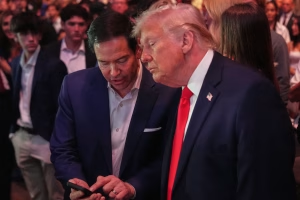
“Most of Latin America would surely be outraged… But I’m not sure anybody can restrain Trump. He seems to pivot when his own business interests or the stock market are at stake. Unfortunately the only country I have seen having any influence over him is Israel!”
More on Prof. Chomsky’s position can be found in her recent interviews with the Progressive, Articulo 14, and Undercurrents Radio WMUA.
Sara Kozameh, an Assistant Professor of History at the University of California, San Diego, highlighted the emerging counter-narrative:
“At this moment that the US is increasingly isolated around the world, Cuba has received help from a growing number of countries. Aid is arriving from multiple governments, including China, which is helping shift Cuba’s reliance toward solar power, and the Turkish government, which has recently delivered a floating power plant to help generate electricity on the island. Additionally, there have been voices calling for major investment in Cuba to help it transition toward almost complete reliance on green energy sources as part of a reparative climate project. This would reduce the effectiveness of using fossil fuels to wage economic warfare and gain leverage against a whole country.”
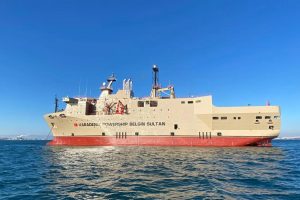
A thinktank analysis by Common Wealth suggests a path forward: an $8 billion investment in renewable energy could cover 93.4 percent of Cuba’s electricity generation needs, breaking the island’s dependence on imported fossil fuels and, with it, US leverage. But that kind of investment requires a political opening that does not yet exist. The Turkish power ship Belgin Sultan has helped reconnect parts of Cuba to the grid, but it’s a band-aid, not a cure.
The crisis in Cuba may have slipped from the headlines, but it hasn’t gone away. Millions of Cubans still wake up in the dark. Thousands of surgeries remain postponed. Children wait for vaccines that may never arrive. And off the coast of Florida, the US military has reportedly discussed plans for a migrant camp at Guantánamo Bay to “deal with” any wave of refugees. The Iran war gave Havana a temporary lifeline. When that war ends, the pressure will return. The question is not whether Trump will turn his attention back to Cuba. It’s what he will do when he gets there.

The latest news in your social feeds
Subscribe to our social media platforms to stay tuned