



With input from the Wall Street Journal, Eli Lilly, CNBC, Axios, Investor’s Business Daily, and Bloomberg.
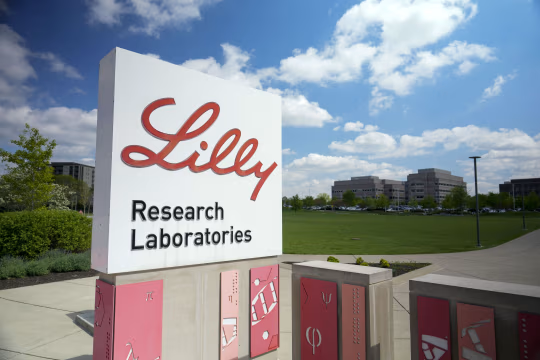
Eli Lilly is opening its wallet again – this time for a high-stakes push into cutting-edge cancer treatment.
The drugmaker said it will acquire Kelonia Therapeutics in a deal that could reach $7 billion. The structure is typical for biotech: $3.25 billion upfront, with the rest tied to how well the science holds up in trials, regulatory reviews, and eventually, the market.
What Lilly is really buying here is a different way to fight cancer.
Kelonia is working on what’s known as in vivo CAR-T therapy – a twist on an already powerful approach. Traditional CAR-T treatments take a patient’s immune cells out of the body, reengineer them in a lab, then infuse them back in. It works, especially in blood cancers like multiple myeloma, but it’s slow, complex, and limited to specialized centers.
Kelonia’s pitch is simpler. Skip the lab work. Reprogram the patient’s T-cells directly inside the body with a single IV treatment, turning them into cancer-fighting machines on the spot.
That shift could matter. Current CAR-T therapies often take weeks to prepare and require chemotherapy beforehand to make room for the modified cells. Kelonia’s approach aims to cut out those steps entirely – faster, less burdensome, and potentially accessible to far more patients.
Lilly’s oncology chief Jacob Van Naarden didn’t hold back, calling the early data “remarkable” and pointing to the convenience of a one-time infusion as a major draw. The company is eyeing not just blood cancers, but eventually solid tumors too – a much tougher frontier.
The competitive backdrop is heating up. CAR-T is already a multibillion-dollar space, with treatments like Johnson & Johnson’s Carvykti pulling in nearly $2 billion in annual sales. Other players are making aggressive moves as well, snapping up rivals and investing heavily in next-generation therapies.
For Lilly, the deal fits a broader strategy. The company has been on a buying streak, branching out beyond its blockbuster diabetes and weight-loss drugs. Those treatments are still driving huge revenue, but Lilly is clearly trying to build a deeper pipeline – especially in oncology.
There’s also a shift in how it’s spending. Lilly used to favor smaller, early-stage bets. Now it’s mixing those with bigger, later-stage deals that come with more data – and a higher price tag.
The trade-off is straightforward. Early science is cheaper but risky. More mature programs cost more, but come with fewer unknowns. Lilly is doing both.
Kelonia sits somewhere in the middle: promising early clinical results, but still plenty to prove. Its lead therapy, aimed at multiple myeloma, has shown encouraging signs so far, though it’s still in early trials.
The deal isn’t expected to close until the second half of 2026, assuming regulators sign off.
Between now and then, the real test begins. If Kelonia’s approach delivers, Lilly could end up with a faster, simpler way to deploy one of the most powerful cancer treatments available. If not, it’s another expensive swing in a field where breakthroughs are rare and setbacks are routine.
Lilly seems comfortable with that risk.



The latest news in your social feeds
Subscribe to our social media platforms to stay tuned