

US pushes new Iran talks while threats escalate and blockade holds

The United States is attempting to restart diplomacy with Iran even as tensions on the ground continue to rise, highlighting the gap between military pressure and political negotiation.
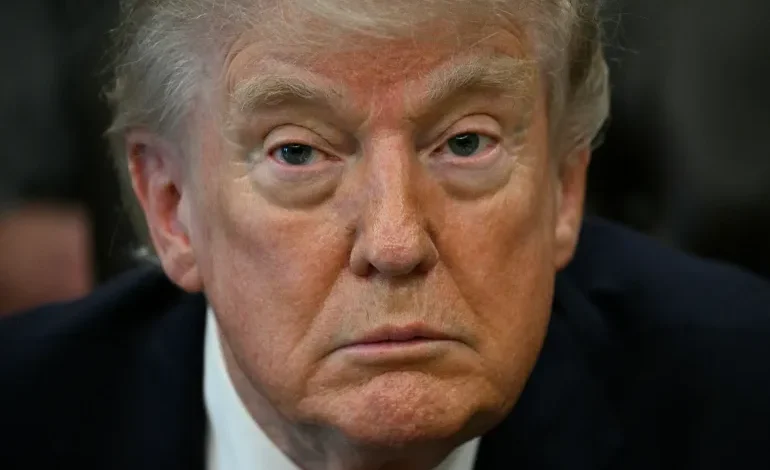
President Donald Trump said on Sunday that US negotiators would travel to Islamabad for a possible second round of talks aimed at ending the US-Israel war on Iran. He did not specify which officials would be involved. The previous round, led by Vice President JD Vance, ended without agreement.
At the same time, Trump paired the diplomatic outreach with a warning. “We’re offering a very fair and reasonable deal, and I hope they take it because, if they don’t, the United States is going to knock out every single power plant, and every single bridge, in Iran,” he wrote on Truth Social.
That combination — talks on one hand, escalation on the other — has shaped the current phase of the standoff. Trump accused Iran of violating the two-week ceasefire, which is due to expire on Wednesday, pointing to an incident in the Strait of Hormuz.
Tehran has responded by questioning the premise of renewed negotiations altogether. Iran’s Tasnim News Agency reported that there is no decision to send a delegation to Pakistan “as long as there is a naval blockade” on Iranian ports. Shortly after, the state agency IRNA said the talks had been rejected.
“Iran stated that its absence from the second round of talks stems from what it called Washington’s excessive demands, unrealistic expectations, constant shifts in stance, repeated contradictions, and the ongoing naval blockade, which it considers a breach of the ceasefire,” IRNA wrote.
The blockade itself has become central to the dispute. Iran’s Foreign Ministry described it as both illegal and destabilising.
“The United States’ so-called ‘blockade’ of Iran’s ports or coastline is not only a violation of Pakistani-mediated ceasefire but also both unlawful and criminal,” spokesman Esmaeil Baghaei said. “Moreover, by deliberately inflicting collective punishment on the Iranian population, it amounts to war crime and crime against humanity.”
On the water, the situation remains volatile. Iran’s Revolutionary Guard navy said the Strait of Hormuz had been closed again less than a day after reopening, linking access directly to the lifting of US restrictions. The US military, meanwhile, said it has already forced 23 ships to turn back since the blockade began and continues to enforce it across Iranian ports and coastal areas.
Diplomatically, both sides acknowledge movement but not resolution. Iranian Deputy Foreign Minister Saeed Khatibzadeh said there had been “significant progress made” in earlier talks but stressed that key frameworks remain unresolved, describing US demands on the nuclear programme as “maximalist”.
Parliament Speaker Mohammad Bagher Ghalibaf struck a similar tone:
“There are many gaps and some fundamental points remain,” he said. “We are still far from the final discussion.”
Trump, for his part, maintained that communication channels remain open, saying the sides had “very good conversations going on” while accusing Iran of getting “a little cute” over the Strait of Hormuz and insisting the US would not be “blackmailed”.
Behind the scenes, regional diplomacy is still active. Pakistani and Iranian officials have spoken about the need for continued engagement, suggesting that while formal talks may be stalled, the broader negotiation track remains in motion.

The latest news in your social feeds
Subscribe to our social media platforms to stay tuned