



Special thanks to the Quincy Institute and Professor of International Politics. The full webinar can be found here.
The question hanging over Washington right is increasingly unavoidable: what if the United States just lost more than a war?
That was the undercurrent running through a recent discussion hosted by the Quincy Institute for Responsible Statecraft, where some of the sharpest critics of American grand strategy picked apart the fallout from the 2026 Iran war. The panel – moderated by Trita Parsi, co-founder and executive vice president of the Quincy Institute, and featuring Monica Duffy Toft, non-resident fellow at the Quincy Institute and Professor of International Politics, founding Director of the Center for Strategic Studies at Tufts University’s Fletcher School of Law and Diplomacy, Stephen Wertheim, senior fellow in the American Statecraft Program at the Carnegie Endowment for International Peace, and Stephen Walt, board member at the Quincy Institute and Robert and Renée Belfer Professor of International Affairs at the Harvard Kennedy School, a contributing editor at Foreign Policy, co-editor of the Cornell Studies in Security Affairs, – didn’t treat the conflict as just another Middle East misadventure.
For decades, US strategy has revolved around primacy – the idea that America should dominate militarily, everywhere that matters, and shape the global order to its liking. Iraq shook that belief. Afghanistan dragged it through the mud. Iran may have cracked it open.
Right out of the gate, Dr. Parsi set the tone.
For decades, US grand strategy has been defined by the pursuit of primacy and military hegemony globally, but costly wars have repeatedly raised questions as to whether this actually serves US interests… and the latest war with Iran that has not gone the manner that Trump thought it would, has raised those questions with even greater urgency.
The conflict never delivered the clean, decisive outcome Washington had banked on. Instead, it spiraled. Iranian missile and drone capabilities proved resilient. US stockpiles were stretched thin. Supply chains groaned. Even basic assumptions about technological superiority didn’t hold up under pressure.
And that’s where Prof. Monica Duffy Toft came in with a warning that landed hard:
The United States has shown that it’s not going to consult with its allies any longer, that it’s going to just go in unilaterally and start wars… our credibility is absolutely now gone as a country, as an allied partner, as a leader of the free world… It’s shown that the United States is not indomitable, that smaller powers… can give us a run for the money… you don’t need to defeat the adversary… you just have to make it too costly to sustain.
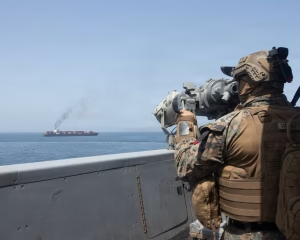
The last line captures something essential about the Iran war. Tehran didn’t need to “win” in the traditional sense. It just had to survive, absorb pressure, and keep the cost meter running, which it did. Oil prices spiked past $100 a barrel at multiple points as the Strait of Hormuz – through which roughly a fifth of global energy flows – became a flashpoint. Tanker traffic stalled. Markets jittered. Allies panicked. Meanwhile, Iranian leadership remained intact. The much-hyped “decapitation strategy” fizzled.
Prof. Toft again:
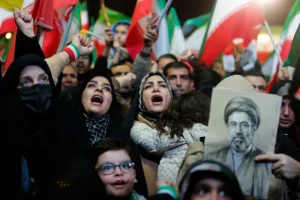
Decapitation didn’t work… we still have a functioning government in Iran… it may outlast the American political will and military might.
A tactical failure became a strategic one.
If Iraq exposed the limits of occupation, Iran exposed the limits of coercion. Prof. Stephen Walt framed it bluntly:
What we are seeing is a pattern where weaker states can exploit the vulnerabilities of stronger ones… the United States can destroy targets, but it cannot easily impose political outcomes.
That gap – between destruction and control – has haunted US policy for years. It’s now harder to ignore. The Iran war showcased a familiar asymmetry. The US deployed advanced munitions, carrier groups, precision strikes. Iran responded with drones, missiles, proxies, and time.
Dr. Stephen Wertheim zoomed out to the bigger picture:
The United States has long pursued military dominance as a default strategy… but what this war shows is that dominance does not translate into control, and control does not guarantee outcomes.
That’s the heart of the problem. Primacy assumes that overwhelming power leads to predictable results. Iran didn’t play along. Neither did global markets, regional actors, and even US allies. Dr. Wertheim kept going:
We are reaching a point where the costs of maintaining primacy exceed the benefits… and yet the system is still geared toward sustaining it.
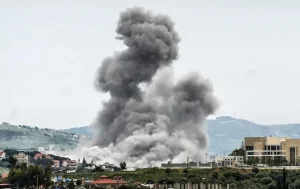
Zoom in on the region, and the picture gets messier. The war didn’t stay contained. Houthis expanded the conflict into the Red Sea. Israeli territorial ambitions spilled into Lebanon. The South Caucasus felt the ripple effects as energy routes and security calculations shifted. East Asia – whose fuels mostly come from the Middle East got hit severely.
Even ceasefire efforts – like the fragile arrangements tied to the 2026 Israel–Lebanon peace talks – looked more like pauses than resolutions. Dr. Parsi captured that uncertainty:
This is not just a war that affects the Middle East… it has implications for global order, for alliances, and for how the United States is perceived everywhere.
Europe. Asia. The Gulf. Everyone is recalculating. Prof. Toft again:
If you are an ally of the United States right now, you have to be asking yourself whether you can rely on Washington… not just for protection, but for judgment.
That’s a subtle but critical distinction.
In Asia, where deterrence against China hinges on credibility, the Iran episode raises uncomfortable questions. If Washington misjudged Iran so badly, what does that say about its assumptions elsewhere? Prof. Walt didn’t sugarcoat it:
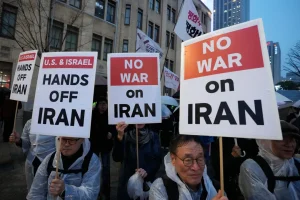
Allies are going to hedge… they are going to look for alternatives, because they cannot assume the United States will always get it right.
That doesn’t mean US alliances will collapse overnight. But they can shift, first quietly, then more openly.
Another takeaway: the war exposed real constraints on US military power.
Stockpiles of precision munitions ran low. The cost of intercepting cheap drones with expensive missiles became glaringly obvious. Technological gaps – especially in autonomous systems – started to show. Dr. Wertheim pointed to the structural issue:
The United States is still optimized for a different kind of warfare… one where overwhelming force produces decisive outcomes. That’s not the world we’re in anymore.
The other major issue is domestic blowback. Wars don’t stay overseas, they come home. The Iran conflict deepened divisions in the US, adding fuel to already polarized debates over foreign policy. Rising energy prices hit consumers. Markets reacted to every escalation. Dr. Parsi framed it in stark terms:
The costs are not just measured in military terms… they are felt in the economy, in politics, in the everyday lives of Americans.
And that feedback loop matters. Public tolerance for prolonged conflict is limited. Iran understood that utilizing Epstein Files rhetoric and modern propaganda efforts.
The big question is: is the end of US primacy. And the panel didn’t offer a simple yes or no. Prof. Walt leaned cautious:
Primacy is deeply embedded in the way the United States thinks about its role in the world… it’s not going to disappear overnight. But it is under pressure in ways we haven’t seen before.
Dr. Wertheim went further:
We may be at an inflection point… where the failures of this war force a reconsideration of what US strategy should look like.
Prof. Toft added a sharper edge:
If we don’t rethink our approach, we are going to keep repeating the same mistakes… at greater cost each time.
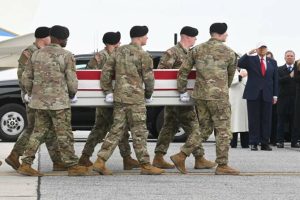
So if primacy is wobbling, what replaces it? The Quincy crowd has a clear preference: restraint. Diplomacy. A narrower definition of national interest. Less reliance on military force as the first tool. Dr. Parsi put it plainly:
Does this moment create an opportunity to rethink not only US foreign policy in the Middle East, but US grand strategy as a whole?
Washington has a long track record of absorbing shocks and reverting to familiar habits. Yet the Iran war case may just work out. It exposed the limits of US power. It showed that smaller states can resist; that technology levels the playing field; that alliances aren’t automatic; that political and economic costs add up fast. Most of all, it forced a question that’s been simmering for years: what is US power actually for? Primacy at all costs now looks increasingly shaky.



The latest news in your social feeds
Subscribe to our social media platforms to stay tuned